



First, a report back from Sam’s 20th college reunion last weekend: it was one of the best weekends I’ve had in years. I keep remembering Saturday night as it poured rain in New Haven and DJ Crazy Chris (yes, that is his stage name) pumped the late 90s and early 2000s jams. Despite two decades of life, being with that group felt like no time had passed at all.
My college friends are the last group in my life where I had the full package of repetition, shared experiences, and accumulated memory that turns a group of people into a community. We lived, ate, studied, and partied together. We had years of overlapping daily life, and because of that we have a foundation of friendship that reached critical mass, like a star becoming a black hole but in reverse.
One of my roommates lives in Brooklyn, and we see each other a few times a month. When I mentioned this at the reunion, people were stunned. Nobody else had a friend they saw that regularly. I felt lucky hearing that, but I also felt the other side of it. I wish I saw more of my people more often. I wish my list of really close friends was longer.
Most of us carry some version of the same wish, and the reunion reminded me that the difference between having community and wanting community is usually one person putting something on a calendar.
Our reunion group is testing this. We’re renting a place in southern California for the 4th of July in 2027 and telling everyone to come. We probably won’t get everyone, but the point is that someone has to be the prime mover, or the group just texts about getting together and never does. But if you have a prime mover, I suspect that’s all you need.
That’s what I’m trying to do here, too, but I want to do better! If you’re coming to Netroots next week, come find me at the Chorus booth. And I’m going to rededicate myself to creating more ways for this community to share experiences together. More on that soon.
The 2026 Rate-Setting Survey is live!
Last year’s rate-setting survey produced the most-read piece we’ve ever published. We’re running an updated version for 2026 to give you the latest info, plus new sections on travel costs, retainer structures, scope creep, and operational expenses that the first round didn’t cover. It takes about five minutes. Take the survey →
“We can’t afford to lose them.”
By Susannah
Every time I hear this from a client, my heart sinks.
Underneath that sentence is something far more dangerous than organizational dependency or the justification of something that isn’t sustainable. This sentence says “we are abandoning strategic thinking and strong operating systems in favor of fear.”
Fear of disruption.
Fear of conflict.
Fear of losing relationships, knowledge, revenue, or stability.
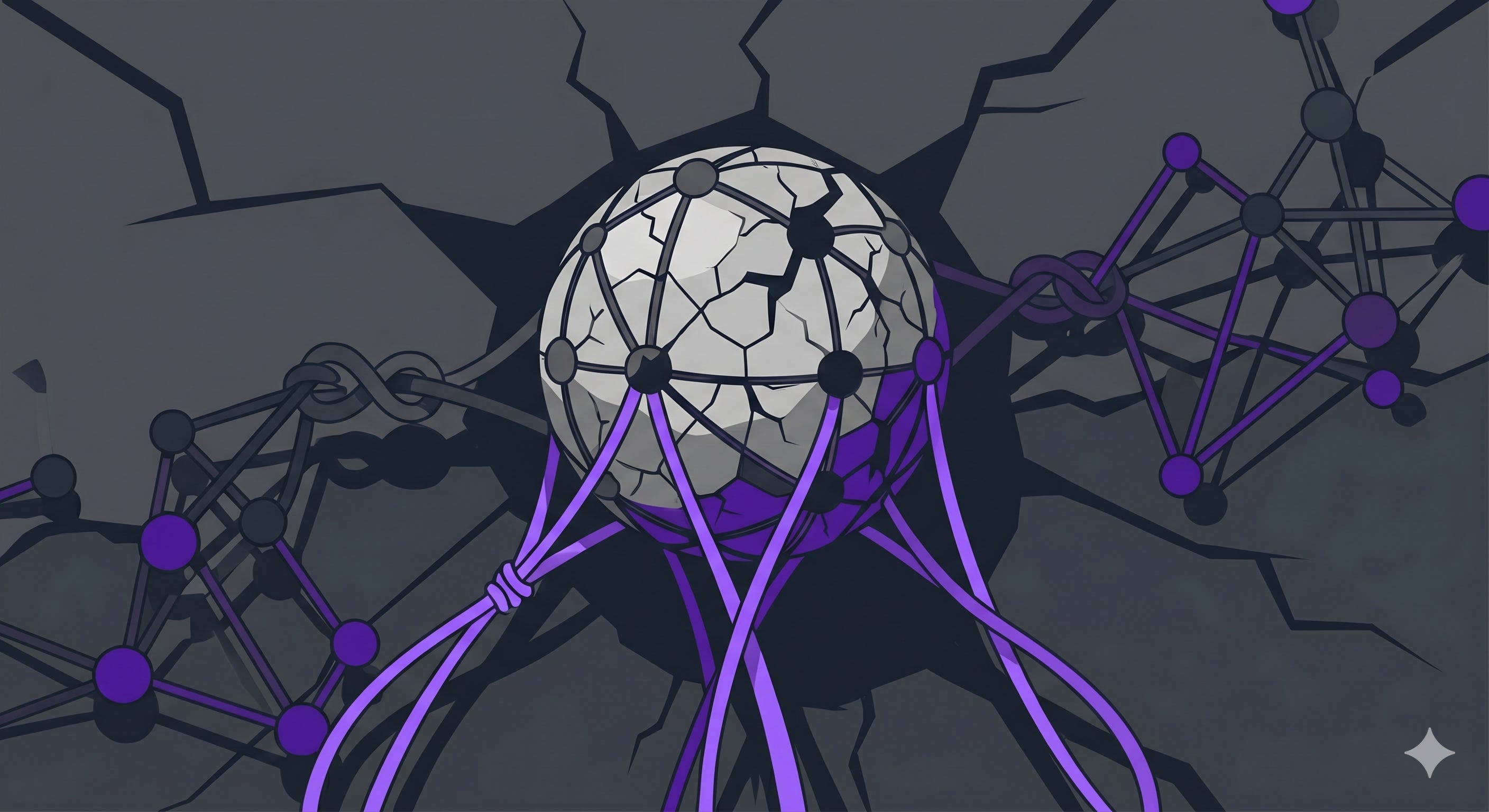
Once fear enters the system, the organization starts changing around it.
Fear cannot be compartmentalized; once it starts driving decisions in one part of the system, it spreads and over time, and organizations reorganize around it.
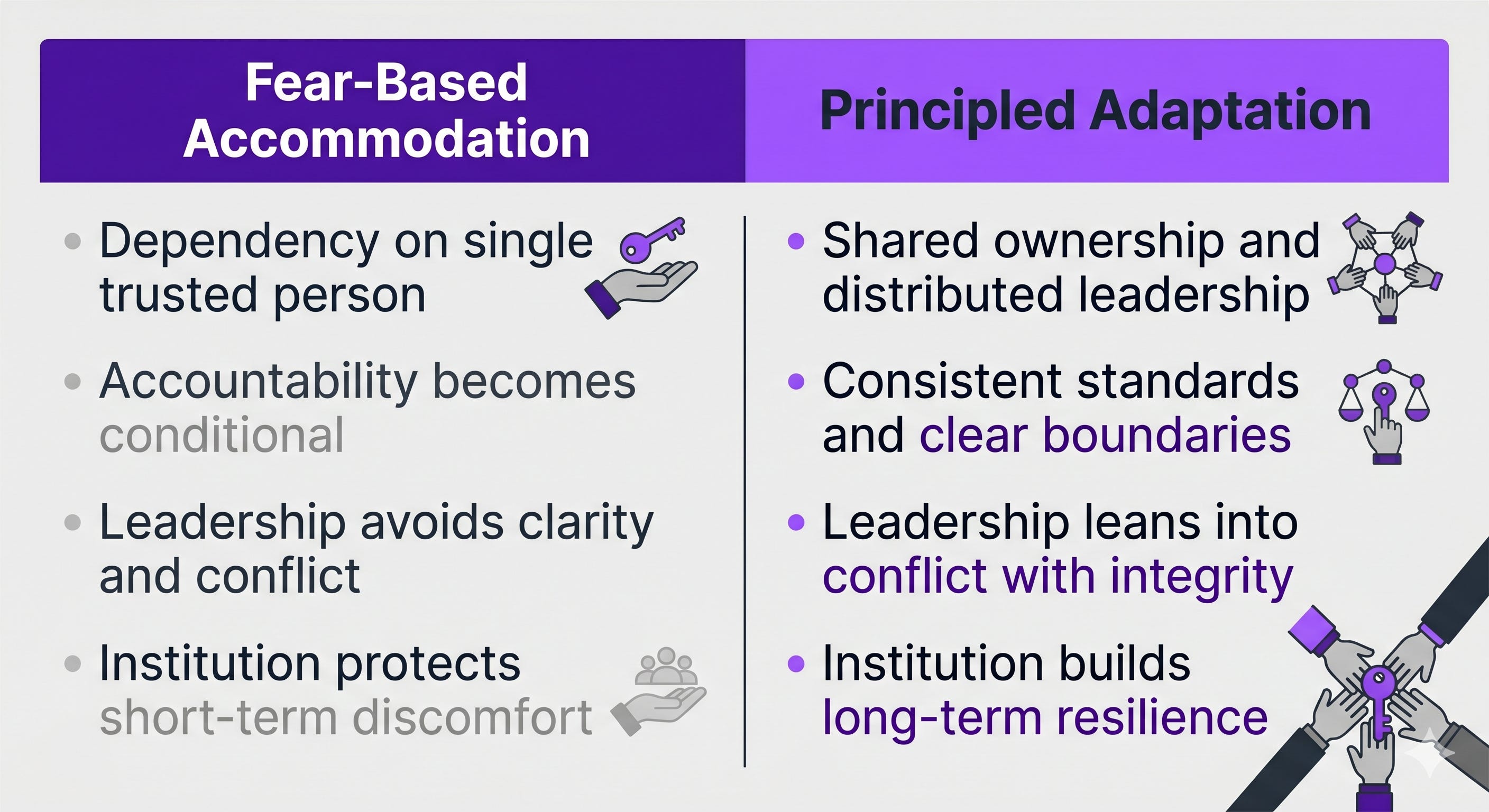
Accountability becomes inconsistent. Policies become flexible for some people and rigid for others. Leadership avoids clarity because clarity might trigger conflict, disruption, or departure. The institution begins protecting itself from short-term discomfort at the expense of long-term resilience.
To be clear: this does not mean organizations should never adapt or work hard to retain strong staff. They should.
Sometimes a person truly is unusually valuable. Sometimes exceptions genuinely make sense. Sometimes reality requires flexibility.
But that is a different question entirely.
There is a difference between: “They’re irreplaceable, so we have to make this work” and “What would need to be true for us to say yes without undermining the system, the policy, or trust across the organization?”
One is fear-based accommodation. The other is principled adaptation.
Strong institutions are intentional, not rigid; they can flex without collapsing, adapt without abandoning principle, and value people deeply without trading the health of the organization.
Fear changes what the institution believes it is capable of surviving.
Accountability starts feeling dangerous. Clear boundaries feel destabilizing. Leadership transitions feel catastrophic. Normal operational friction gets interpreted as existential threat.
People adapt to fear-based systems faster than leaders realize.
Managers stop escalating issues because they know nothing will happen. Teams begin routing around certain people instead of relying on a shared process. High performers burn out carrying the weight of inconsistency. Institutional knowledge becomes increasingly concentrated because no one wants to challenge the dependency.
Eventually, the organization starts spending more energy managing around fragility than strengthening the system itself.
But they rarely experience themselves this way. Instead they experience themselves as pragmatic. Flexible. Protective of the mission. Avoiding unnecessary disruption.
They will not say:
“We no longer trust the institution to hold.”
They will say:
“They’re indispensable.”
Because the alternative would require admitting something organizations rarely admit out loud: that the systems are weaker than they appear; that knowledge has become too concentrated and accountability has become conditional; that the institution no longer trusts itself to absorb disruption.
And to fully acknowledge that would require confronting the implications: things need to change. And that is the very thing that fear works so hard to protect against.
Institutions organized around fear become fragile because fear prevents the very things resilience requires:
Shared ownership requires letting go of control and dependency on a single trusted person
Clear accountability risks conflict, destabilization, or departure
Succession planning forces acknowledgment that someone might leave
Documentation reduces the protective power of concentrated knowledge
Distributed leadership requires trust that others can carry responsibility
Institutional trust requires consistency, transparency, and willingness to hold boundaries even when it comes at a cost
Building resiliency requires institutions to tolerate discomfort, uncertainty, exposure, and redistribution of power — and fear resists all of them. Fear says: protect stability, avoid disruption, don’t trigger conflict, don’t risk losing the person, keep the system functioning at all costs, preserve what feels safe right now.
So instead of building resilience, the institution starts optimizing for anxiety reduction and eventually, it stops building capacity in order to preserve dependency.
That is the real danger. Not that someone valuable exists, but that the institution quietly loses confidence in its ability to hold boundaries and still function.
Your Move
If any of this feels familiar, the question is not:
p“Who is the indispensable person?”
The question is:
“Where has fear started making decisions for the institution?”
Where have standards become inconsistent?
Where have accountability conversations become avoided?
Where has knowledge become too concentrated?
Where are people quietly managing around dysfunction instead of addressing it?
Where has short-term stability started taking precedence over long-term resilience?
Because fear thrives in ambiguity and dependency.
If you recognize this pattern in your organization, start by strengthening the things fear erodes first:
clarify decision-making
distribute knowledge
document critical processes
reduce single points of failure
make accountability more consistent
build capacity to absorb transition without panic
Not because people are disposable, because once exemption becomes necessary for the institution to function, the institution is already weaker than it appears.