

About a year ago before I had started this Substack, I shared a resource with a few friends and colleagues: Leadership Mindset for Independent Consultants: A Practical Guide. It was well-received. Since then I’ve kept thinking about the topic of leadership for independent consultants and trying to boil it down to something useful. So, here we go!
Here is a little story that sets the scene. A few years back, I sent a proposal to a prospective client. The executive director called me the next day with a question: “Your proposal is solid, but I’m curious about something. How do you measure whether you’ve been successful with us?”
I had a few answers ready at hand client satisfaction and project deliverables. After we hung up, I realized I’d missed the real question. He wasn’t asking about project metrics. He was asking how I define success for myself as an independent consultant.
That conversation exposed something that is the theme I’ve been exploring repeatedly here and previously. Independent consultants operate without the scaffolding that traditional employment provides: we don’t have performance reviews, a clear advancement path, or externally imposed benchmarks. We must invent our own yardsticks, but many of us never do this work deliberately.
Over time I’ve come to see this as one of seven mindset shifts that make independent consulting feel less like improvisation and more like leadership:
Create your own measures of success
Use client work to expand your capabilities
Hold client service and self-development at the same time
Connect projects into a coherent narrative
Treat challenges as growth, not tests
Adapt your offer to stay relevant
Manage toward outcomes, not activities
In another recent newsletter about leadership, I explored how we lead our clients and our own businesses. But leadership requires more than recognizing our role. It demands specific internal shifts that change how we approach our work.
Creating Your Own Measures
When I left organizational life to consult independently, I lost something I was honestly kind of addicted to: external validation. Now, no one tells me if I am doing well. I don’t get annual reviews anymore confirm my performance. I found this absence disorienting from day one of independent consulting.
As I approach my 6th anniversary of working solo, I believe the solution is to develop personal metrics that reflect what consulting excellence means to you. By personal metrics, I mean specific indicators that tell you whether you’re building the practice you want.
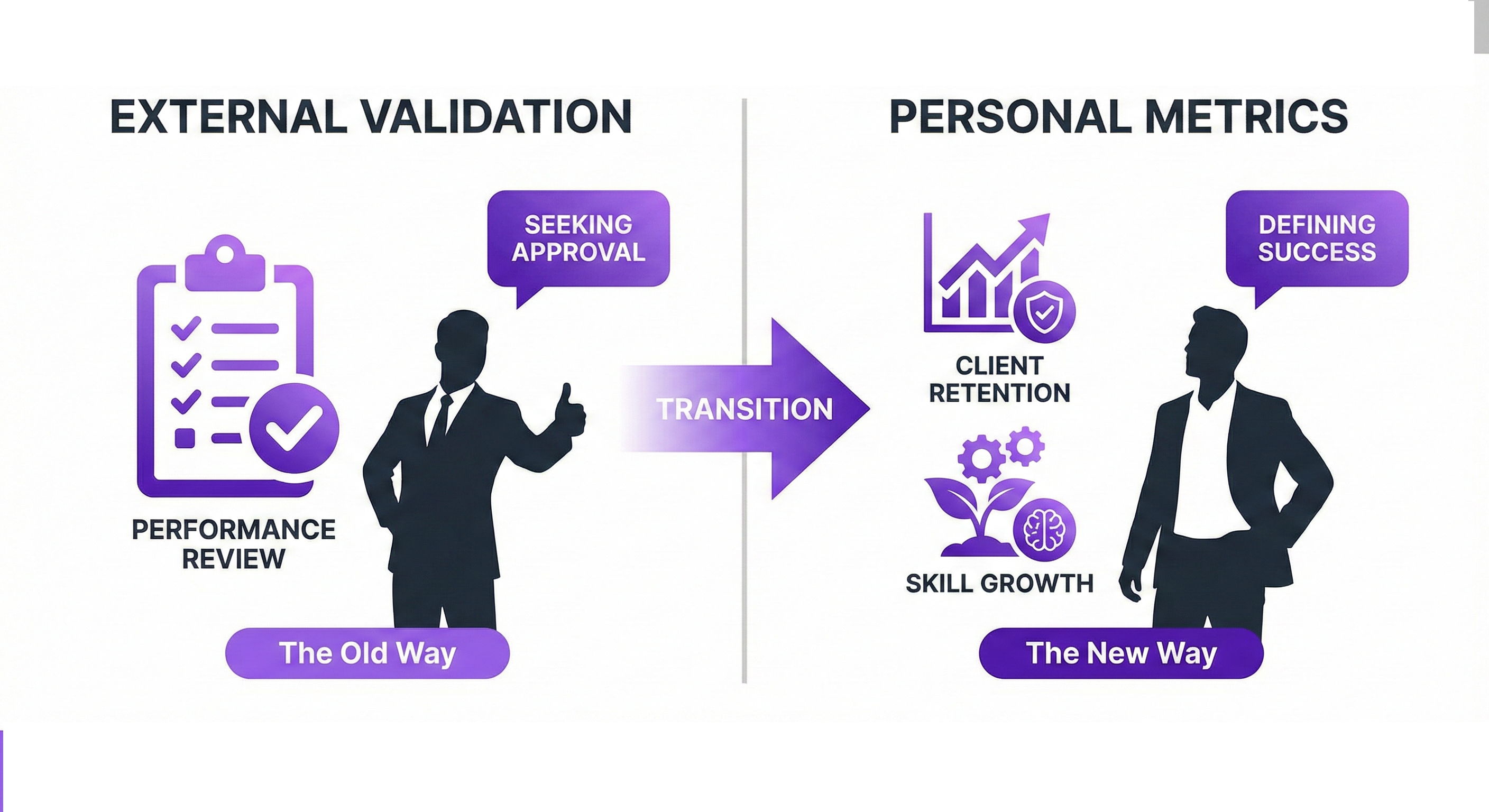
These metrics might include client retention rates, the percentage of work that comes from referrals, or how often clients implement your recommendations. You might track your effective hourly rate or the number of projects that stretch your capabilities. The specific measures matter less than the act of choosing them deliberately.
I developed three primary indicators for my practice. First, I track whether clients engage me for follow-on work within eighteen months. This tells me if I delivered enough value to warrant continued partnership. Second, I monitor how many new clients come through existing client referrals. This reveals whether I’m building the kind of relationships that prompt recommendations. Third, I assess whether each project leaves me with new capabilities or intellectual property I can apply elsewhere.
This last measure connects to a second critical shift: viewing client work as a frontier for your own growth.
Micro-action: Write down 3 metrics you’ll review quarterly: one about client value, one about business health, and one about your growth.Expanding Your Capabilities Through Client Work
Early in my consulting practice, I accepted only projects that felt comfortable. I wanted to deliver with confidence, which meant staying within my established expertise. This approach kept me safe but stagnant.
I now approach client selection differently. I look for the intersection between what clients need and what would expand my capabilities. I wouldn’t recommend seeking work you’re unqualified to do, but rather searching for projects that require you to develop adjacent skills while still delivering on your core expertise.

A nonprofit client once asked for help with strategic planning. I’d done this work many times. But during our initial conversation, she mentioned their board wanted to understand their theory of change more deeply. I’d studied theory of change methodology but hadn’t formally facilitated an organization through developing one. I proposed incorporating this into the strategic planning process.
The project stretched me. I spent evenings reading current thinking on theory of change frameworks. I reached out to colleagues who specialized in this work. The client received exceptional value because I brought fresh energy and current research to the engagement. And I gained a new methodology I could offer future clients.
This approach requires viewing each client engagement through a dual lens: what outcome will serve the client, and what capability will I develop. When these objectives align, you deliver exceptional value while growing your practice.
Reflective question: What’s the smallest "adjacent stretch" you could build into your next engagement without putting the client at risk?Hold Two Jobs at Once: Client Outcomes & Your Growth
Independent consultants navigate a constant tension. We’re deeply committed to client success, yet we must also develop our own practices and capabilities. Finding balance between these imperatives requires intention.
Some consultants err toward complete self-sacrifice, saying yes to every client request and burning out in service to others. Others prioritize their own development at the expense of client needs, using engagements primarily as learning laboratories. Neither extreme serves well.
I’ve found that transparency helps navigate this tension. When appropriate, I share my development goals with clients and find ways to align them with client outcomes. Last year, I told a client I was developing expertise in digital transformation for small nonprofits. We discussed how this aligned with their needs, and they welcomed my investment in learning that would benefit their project.
This transparency builds trust. Clients appreciate knowing you’re invested in growing capabilities that serve their needs. It also positions you as a learning partner rather than an all-knowing expert, which often leads to more honest and productive relationships.
Tell: If your week has no protected time for learning, your practice is borrowing against its future.Connecting Individual Engagements to Larger Purpose
The most successful consultants I know maintain a coherent narrative about their work. They can explain not just what they do, but why they do it and how each client engagement contributes to a larger mission.
This narrative serves two purposes. First, it provides meaning and continuity to work that might otherwise feel fragmented. When you move from client to client, project to project, a connecting story prevents your practice from feeling like a series of disconnected transactions.
Second, this narrative helps clients understand how their specific project fits into broader sector trends or challenges. This contextual framing adds value beyond immediate deliverables and positions you as a strategic partner.
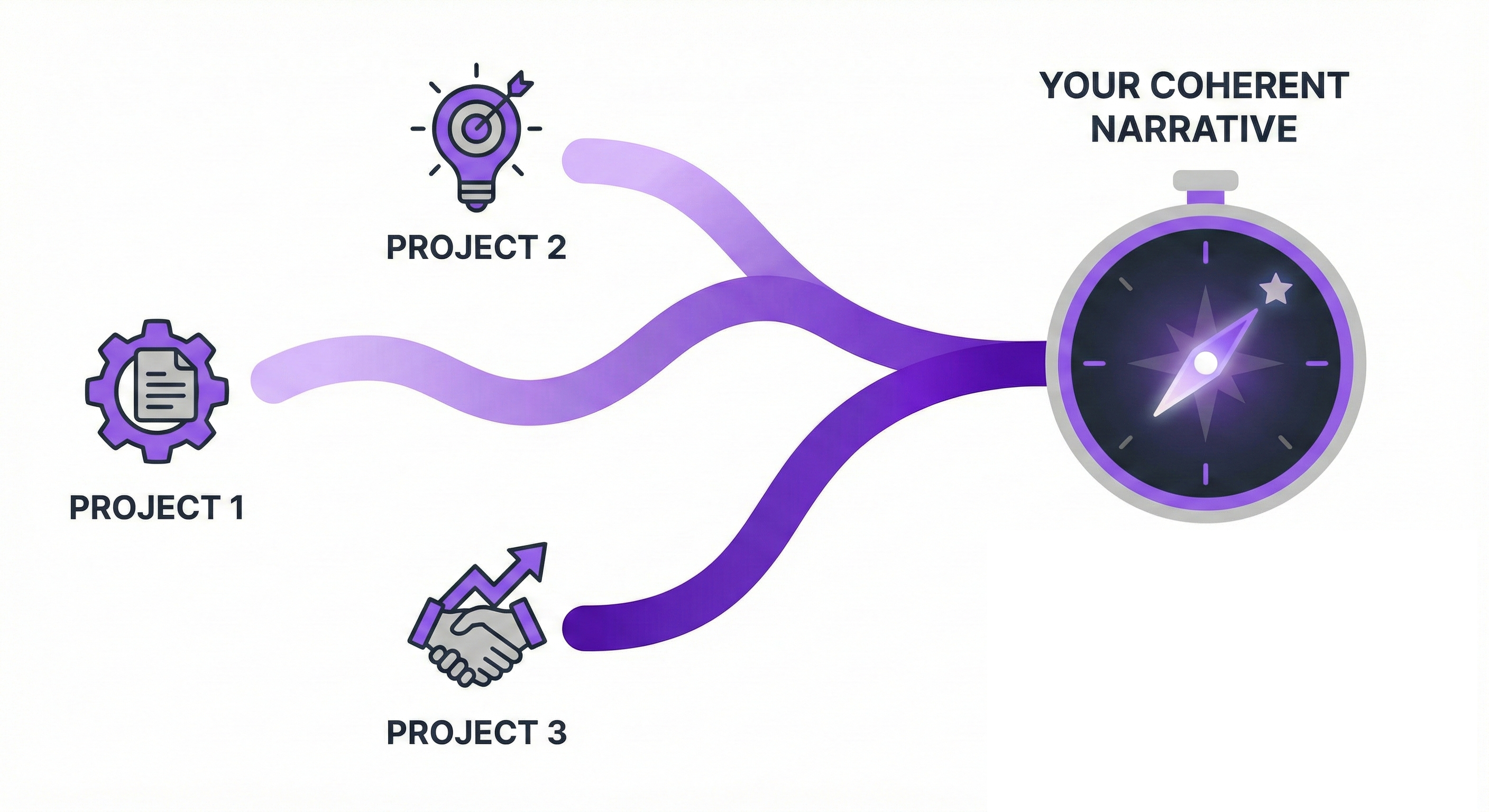
My narrative centers on helping nonprofit organizations start something new. Each client engagement, regardless of its specific focus, connects to this larger purpose. When I work on strategic planning, I’m helping an organization prepare for what’s next. When I facilitate board development, I’m building the board’s capacity to start new things.
Your narrative should evolve as you gain new experiences and insights. After each engagement, I reflect on how it fits into or changes my understanding of my purpose.
Micro-action: After each project, write a 2-sentence "why this mattered" note: what changed for the client, and what it revealed about your bigger mission.Embracing Growth Through Challenge
A growth mindset, the belief that abilities develop through dedication and effort and that we all have the capacity to grow and improve, is particularly valuable for independent consultants. We must continuously adapt to new client contexts, each with unique cultures, challenges, and constraints.
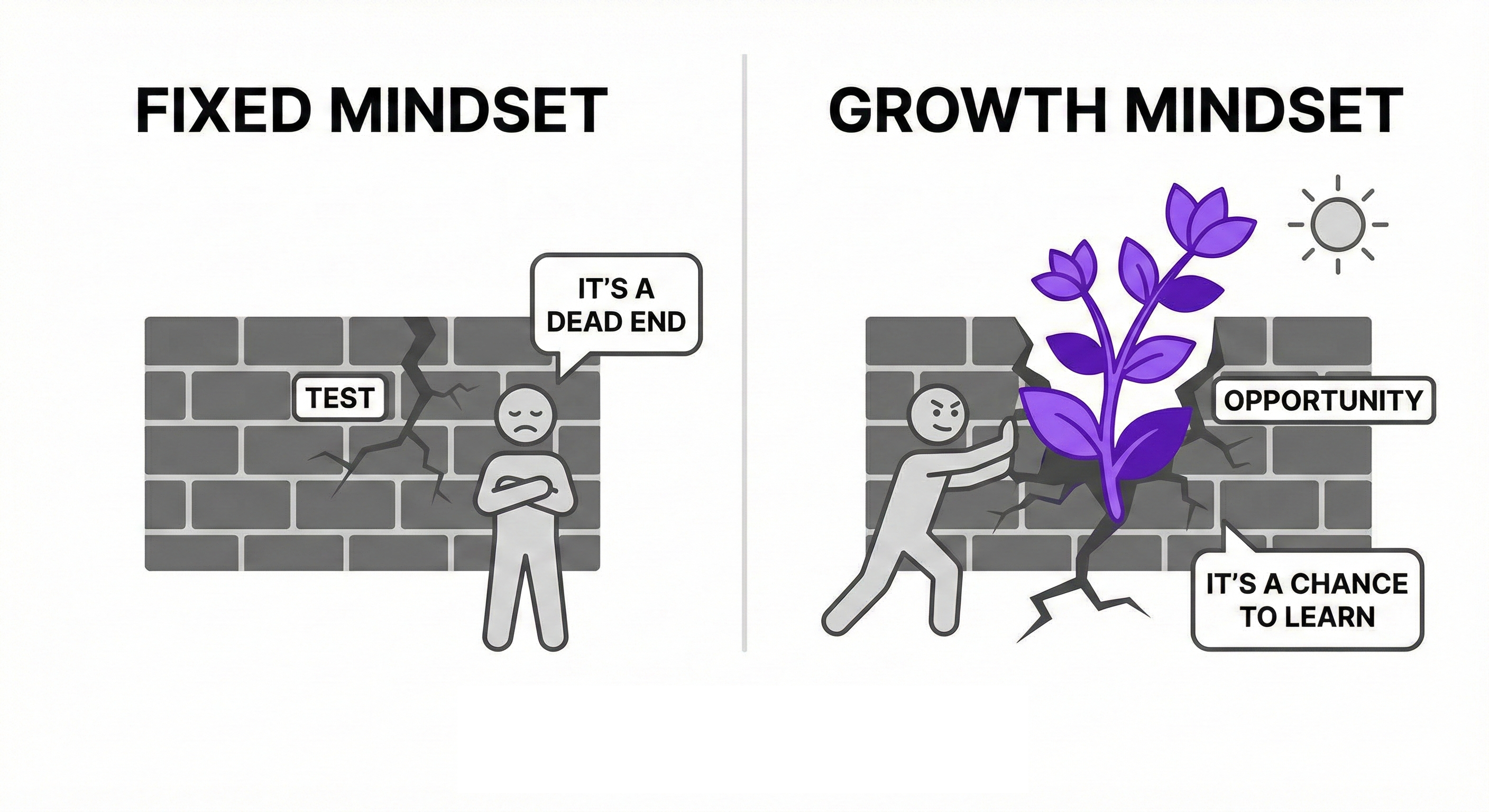
This mindset shift means approaching client challenges as opportunities to develop new capabilities rather than tests of existing expertise. When a client presents a problem I haven’t encountered before, my first thought is no longer “Do I know how to solve this?” but rather “What will I learn by solving this?”
Once, a client asked for help with something I’d never done: facilitating a merger conversation between two organizations. I could have referred them to a consultant with merger experience. Instead, I reframed the challenge. I had deep expertise in facilitation, organizational development, and change management. A merger was simply an application of these skills in a new context.
I was transparent with the client about my lack of merger-specific experience while highlighting the relevant capabilities I would bring. They appreciated my honesty and hired me. The engagement taught me about merger dynamics I now apply in other contexts.
Modeling this growth mindset for clients often strengthens relationships. When you’re transparent about your learning process and how you develop new approaches to address their challenges, you demonstrate the same kind of adaptation you’re encouraging in them.
Reflective question: What would you attempt if you could be honest about being a learner without losing credibility?Treat Your Offer Like a Living Thing
The consulting landscape shifts constantly. Client needs evolve, new methodologies emerge, and sector priorities change. The ability to adapt is perhaps the most critical factor in building a sustainable practice.
This requires regularly reassessing your service offerings, methodologies, and target clients to ensure they reflect current needs and opportunities. It means being willing to let go of approaches that no longer serve you or your clients, even if they once formed the core of your practice.
When I first started out, much of my work focused on strategic planning using traditional frameworks. I noticed clients increasingly requested help with implementation rather than planning. They had plenty of plans sitting on shelves. They needed support turning strategy into action.
I could have continued marketing strategic planning services. Instead, I adapted my offerings to emphasize implementation support and capacity building. This shift required developing new tools and approaches, but it aligned my services with what clients actually needed.
Micro-action: Once a quarter, ask two clients: "What are you trying to do this year that feels hard right now?" Then adjust your offering language accordingly.Focusing on Outcomes Over Activities
Clients hire consultants for outcomes, not activities. Yet many consultants focus more on their methodology than on the results they’re trying to achieve. This represents a fundamental misunderstanding of our role.
At the start of each engagement, I work with clients to establish clear, measurable outcomes that define success. What will be different when our work together is complete? How will we know we’ve succeeded? These questions anchor everything that follows.
This outcome focus gives you flexibility in how you reach the destination. When clients become overly focused on specific methodologies or processes, you can redirect the conversation to results. When scope creep emerges, you can use agreed-upon outcomes to guide discussions about priorities and resources.
A client once asked me to conduct a comprehensive organizational assessment using a specific framework they’d found online. Rather than immediately agreeing, I asked what they hoped to accomplish with the assessment. They wanted clarity about where to focus limited resources for maximum impact.
We agreed on that outcome, then discussed the best way to reach it. The specific assessment framework they’d found might help, but so might other approaches. By focusing on the destination rather than the journey, we maintained flexibility to adapt our methodology as we learned more about their context.
Tell: If you can’t state the outcome in one sentence, you’re not ready to lock in the methodology.The Compounding Effect
These seven mindset elements interconnect and reinforce each other. When you create your own success measures, you’re better positioned to invent new frontiers for growth. When you focus on outcomes over activities, you gain flexibility to balance client service with your own development. When you maintain a coherent narrative about your work, you see how each adaptation contributes to your larger purpose.
Cultivating these mindsets alongside your technical expertise creates a consulting practice that delivers exceptional value to clients while supporting your own professional growth and fulfillment. This is what leadership as an independent consultant ultimately means: guiding others while continuously developing yourself.
Which of these mindset shifts challenges you most right now? I’d be interested to hear how you’re navigating these tensions in your own practice.
Thanks,
Sam