



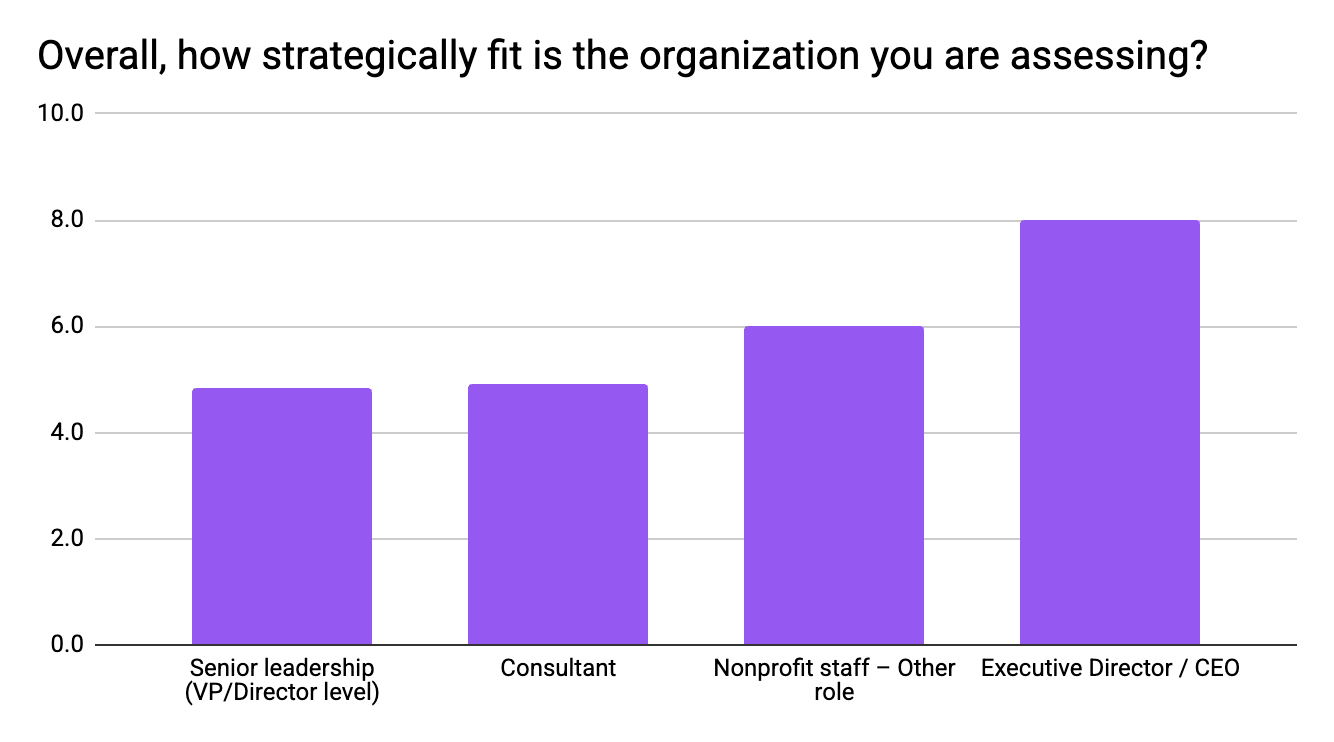
Here is the most important number in this report: 3.17
That’s the gap (on a ten-point scale) between how Executive Directors and CEOs rate their organization’s strategic fitness and how everyone else does. EDs gave themselves an average of 8.0 out of 10. Senior leaders one rung below them said 4.83. Consultants who advise these same organizations said 4.91.
This is a chasm wide enough to suggest that the people running these organizations and the people working inside them are describing two entirely different places.
Earlier this year, we ran a survey of nonprofit practitioners and the consultants who advise them, asking them to rate nonprofit strategic behaviors, governance mechanics, and perceived outcomes across the organizations they know best. The sample is small and weighted toward environment and climate organizations, with advocacy and civic engagement as the second-largest cluster. It’s a pilot, not a census, but pilot data can be revealing precisely because it hasn’t been sanded smooth by scale, and what this data reveals is not comfortable.
We went in expecting to confirm a thesis we’ve been circling for a while. The strategic challenges nonprofits face are less about talent or vision and more about infrastructure: the decision architectures, meeting cadences, and prioritization systems that make strategic behavior the default rather than the exception. The data confirmed that thesis. It also surfaced four findings we didn’t anticipate.
This is the first of two pieces. Today: what the people at the top believe, versus what everyone else sees. On Thursday: what makes it worse, why no one catches it, and what we’re doing about it.
1. The People at the Top Think Everything Is Fine
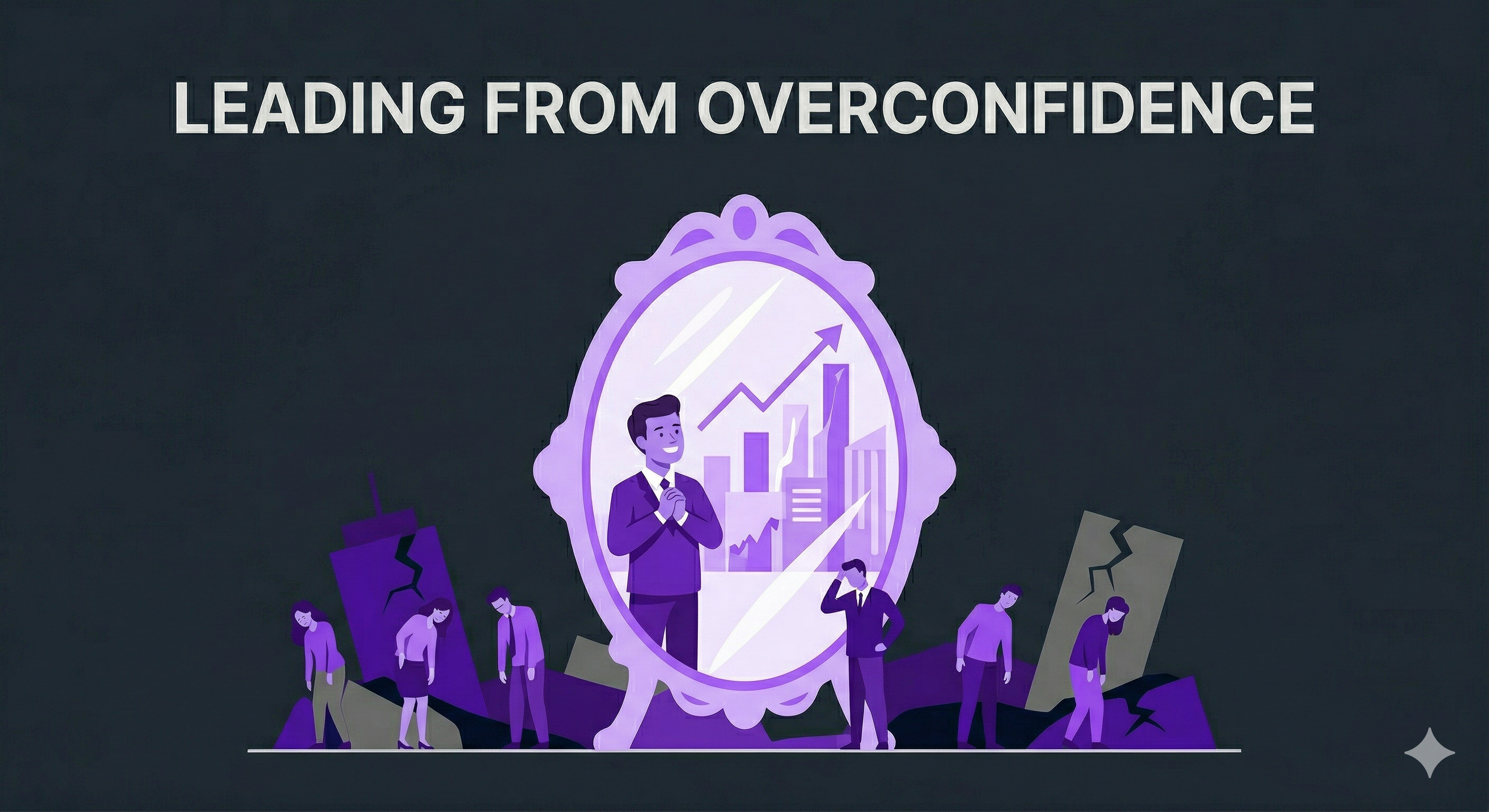
The leaders most responsible for closing these gaps are the least likely to believe they exist.
Start with that overall fitness rating. The EDs in our survey rated their organizations at the top of the scale: an average of 8.0 out of 10. The senior leaders (VPs, Directors) averaged 4.83. The consultants averaged 4.91. One “Other” staff member said 6.0.
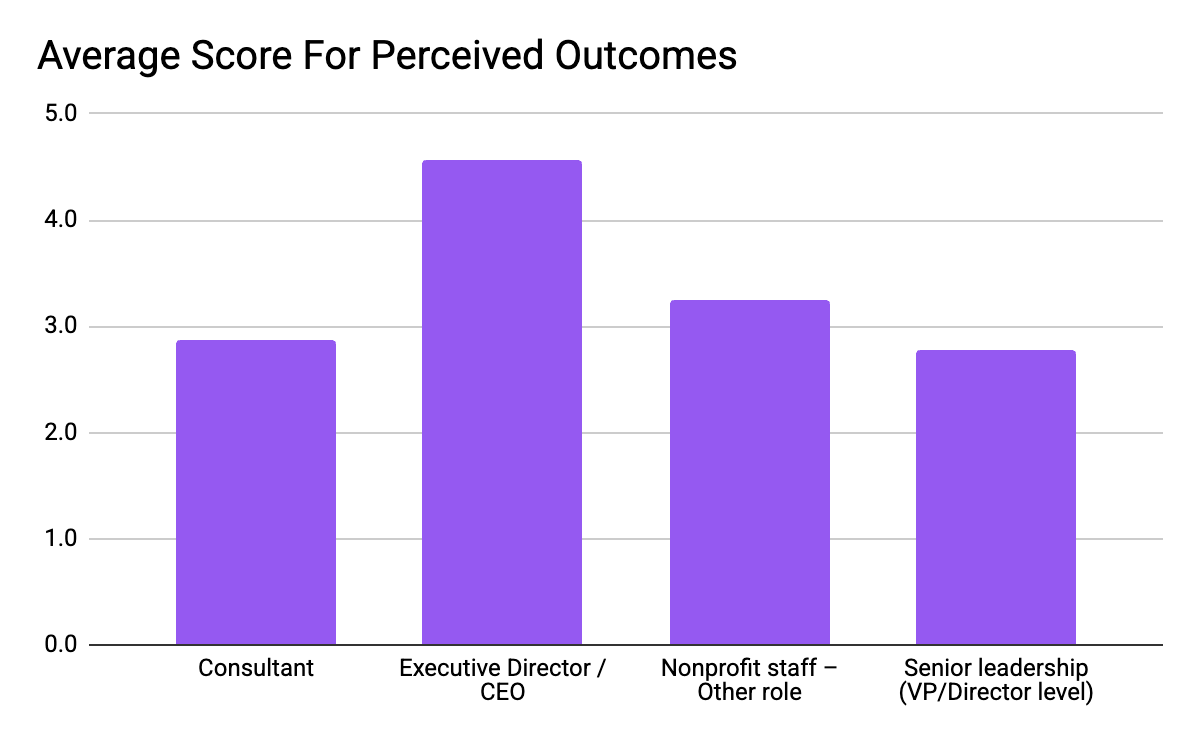
The behavioral composite tells the same story. EDs rated their organizations at 4.29 out of 5 on strategic behaviors. Senior leaders: 3.03. Consultants: 2.77. On perceived outcomes (the section that asks whether strategy actually produces results people can feel), EDs said 4.56, senior leaders said 2.77, and consultants said 2.88.
There are caveats: CEOs are optimists by professional necessity; the view from the top is always rosier; it is a small sample. All true.
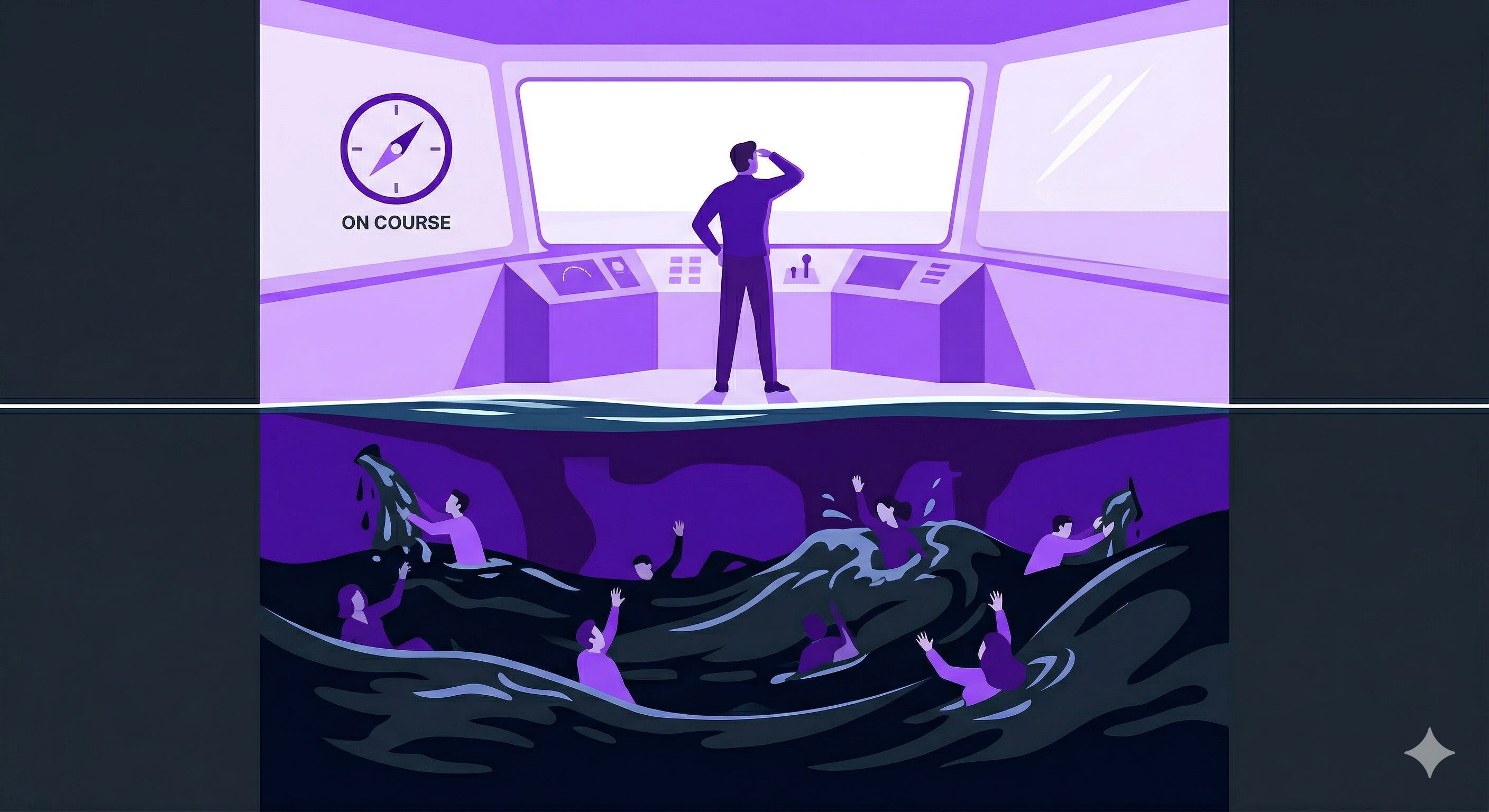
But the pattern runs in one direction only, across every dimension we measured, without exception. And it tracks what practitioners describe anecdotally all the time: EDs who believe their organizations are executing well while their teams are quietly drowning, confused about priorities, unclear on who owns which decisions. The boss thinks the ship is on course, but the crew can see water coming in below deck.
Not a single respondent—zero out of twenty—rated leadership modeling at “Always.” The ceiling was “Often.” Leaders are asking their teams to think strategically while not consistently demonstrating it themselves. The ED who rates their organization an 8 out of 10 has also never, by their own account, always modeled the behavior they’re assessing.
This isn’t a failure of intelligence or commitment. It’s a failure of systems.
Leaders making resource decisions, hiring decisions, and Board-facing decisions based on their own assessment of organizational health are almost certainly making those decisions from a position of overconfidence. And the gap shows up in exactly the places where honest self-assessment matters most.
2. They Don’t Just Disagree in General. They Disagree on Everything That Matters
The perception gap isn’t a matter of perspective. It shows up on every specific behavior, and it’s widest exactly where honest self-assessment is most consequential.
If the perception gap were limited to a general vibes check—”how’s the organization doing overall?”—you might chalk it up to optimism bias and move on. But the divergence shows up at the item level, in the specific behaviors the survey measures. The spread is largest on exactly the questions that require the most honest self-assessment.
Prioritization Discipline
The ability to explicitly decide what the organization will not do and protect those boundaries is where the gap is most striking. EDs rated their organizations at 5.0 out of 5. Senior leaders rated the same behavior at 2.67, which is closer to “rarely.” Those are two incompatible descriptions of reality, not a difference of perspective. The CEO says “we always decide what we won’t do.” The VP says “we almost never do.” Someone is wrong, and the data suggests it isn’t the VP.
Systemic Diagnosis
Tracing how problems are interconnected before jumping to solutions shows a nearly identical split: EDs at 3.0, senior leaders at 2.83. Closer, but still, the EDs’ self-assessment exceeds their teams’ on every behavior we measured.
Learning Integration
Examining what’s working and acting on it lands at 4.5 for EDs and 2.83 for senior leaders.
Strategy-Operations Connection
EDs said 4.5. Senior leaders said 3.33. Consultants, who see the same organizations from outside, said 2.27.
The consultant numbers deserve a separate note here. On nearly every behavioral item, consultants score their client organizations lower than the internal staff do.
Prioritization Discipline: 2.27 (consultants) vs. 2.67 (senior leaders).
Learning Integration: 2.18 vs. 2.83.
Strategy-Operations Connection: 2.27 vs. 3.33.
When the people advising on strategy and the people doing the work both disagree with leadership, and disagree in the same direction, the signal is hard to ignore.
This pattern has a name in organizational psychology: the CEO disease. This is the tendency for information to get filtered, softened, and optimized for palatability as it travels upward. Bad news slows down while good news speeds up. The person at the top gradually starts inhabiting a version of the organization that doesn’t match the one people actually work in.
On Thursday
The perception gap tells you the problem exists. It doesn’t tell you why it persists, or why no one catches it.
For that, you need to look at what happens as organizations grow and what happens to the people furthest from the room where strategy gets made. The data has answers on both, and they’re connected in ways we didn’t expect.
Part 2 comes Thursday. We’ll also share what we’re building to do something about it.