

My friend Robin Engle, Founder of Abundance Catalyst, told me about a moment in a lot of nonprofit hiring conversations that feels almost scripted.
You’re on a discovery call. The executive director is tired. The board is anxious. The budget has a hole in it that feels moral as much as financial. And someone asks, sometimes directly, sometimes in a more polite disguise:
“So… do you have relationships you can bring?”
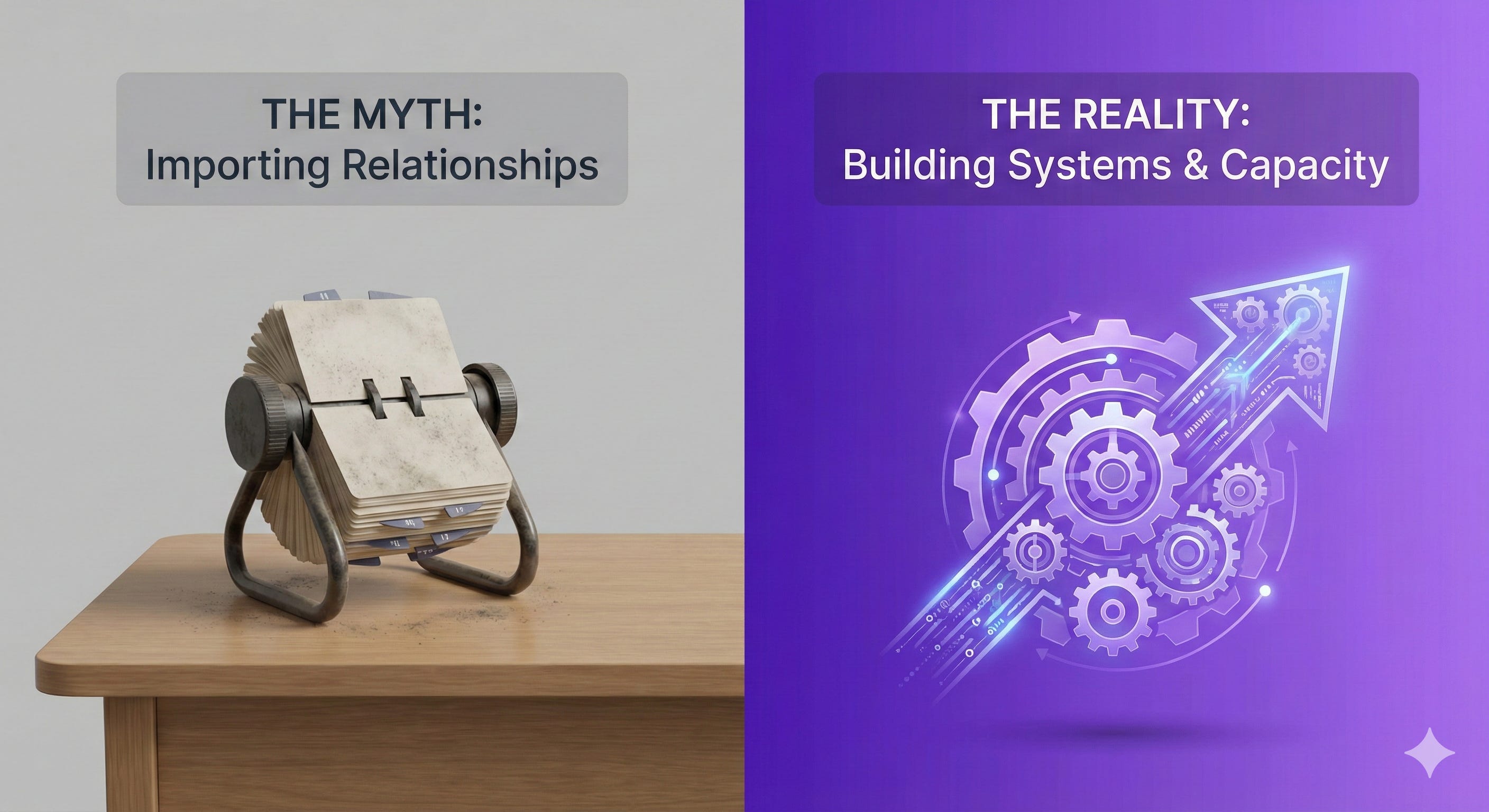
In nonprofit development, this is the Rolodex myth: the belief that when you hire a fundraising consultant, they show up with a list of wealthy people and simply import them into your organization.
We understand why it’s seductive. When you’re under-resourced, everything looks like salvation. And when fundraising feels uncomfortable, outsourcing the discomfort can sound like leadership.
But it’s not how it works.
Whether a nonprofit is looking for help with development or anything else, hiring a consultant is not buying a shortcut. Instead, it’s buying a process: systems, coaching, and accountability that turn your existing relationships into durable revenue over time.
This piece comes out of a conversation between us: Sam, who spends a lot of time thinking about how organizations buy help (and what they secretly hope they’re buying), and Robin, the Founder of Abundance Catalyst and a powerhouse strategist who has raised over $30 million, secured seven-figure gifts, and spent two decades leading development for social justice organizations.
We’ll stay grounded in fundraising because it’s the example Robin knows best. But the underlying pattern — the “one person will fix it” story — shows up in every consulting niche.
The fantasy: one person will fix it
The “quick fix mentality” can be boiled down to a specific narrative structure:
The problem is urgent and painful.
The solution is a single decisive action (hire the right person, buy the right tool).
The outcome is fast and disproportionately large relative to effort.
In fundraising, the quick fix often takes the form of a single heroic donor.
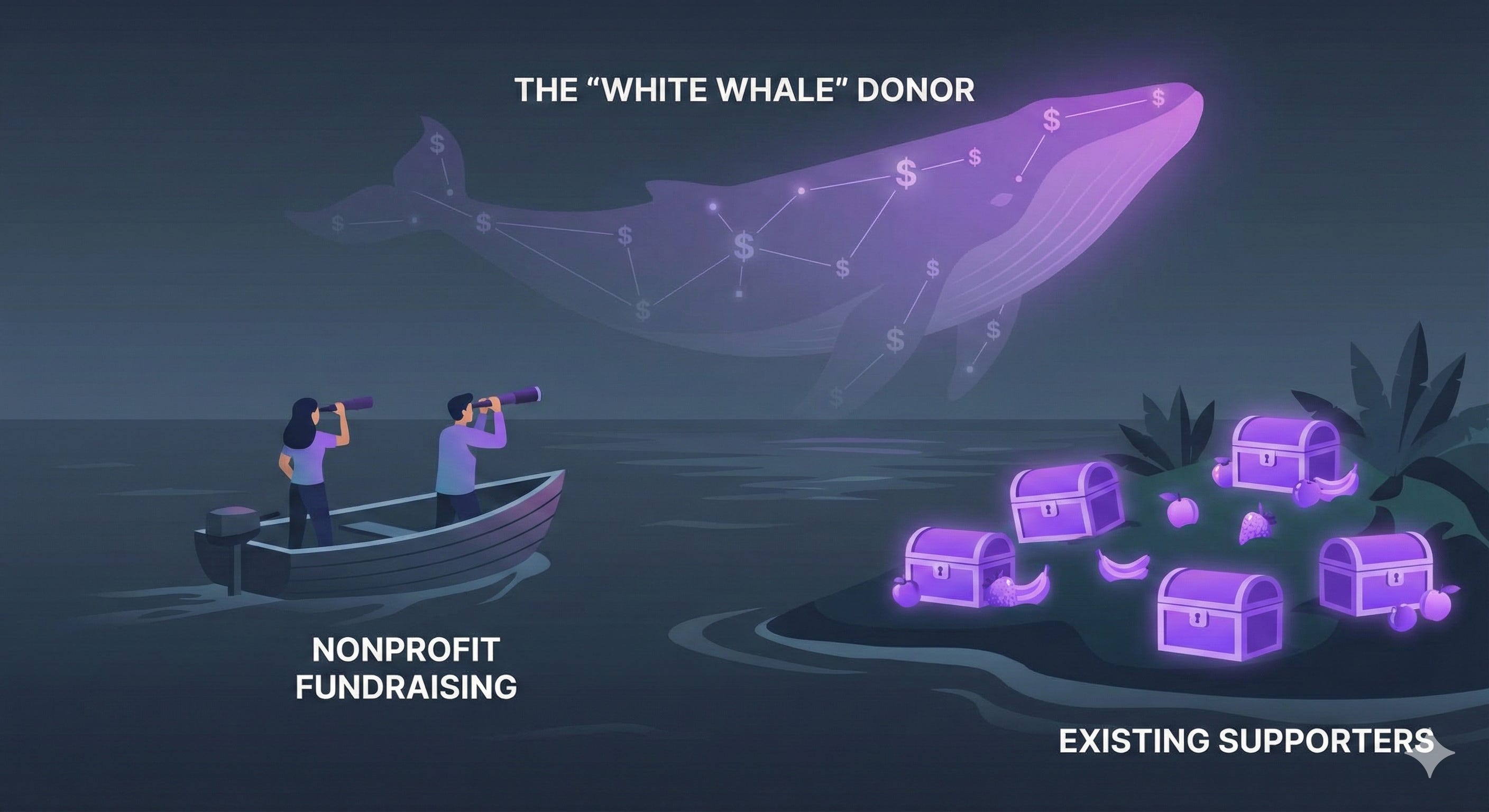
Robin calls this the white whale donor myth, borrowing from Moby Dick. Captain Ahab becomes obsessed with one mythical creature — the whale that will “fix everything” — and sacrifices the ship for the chase.
In nonprofit land, the whale changes names depending on the year:
“If only we could get Oprah.”
“If only we could get Bill Gates.”
“If only MacKenzie Scott would fund us.”
Big gifts are great, to be clear! But planning around fantasy gifts creates a kind of organizational delusion: budgets get built on hope, strategies get narrowed around the improbable, and the ordinary work that actually pays the bills gets deferred.
Robin has seen this from the inside. In one organization she joined as head of development, a $1M gift was written into the budget from a founder/board president despite no pledge, no firm commitment, and no history of giving at that level. The “pathway” to that gift became a time sink through repeated attempts to unlock it, recurring rounds of disappointment, and constant budget revisions as the likelihood shrank.
The consequence was pulling time and focus away from building reliable flexible revenue that would have allowed the organization to pivot into deeper advocacy work.
This is the real danger of quick-fix thinking. It usually doesn’t work, and while you’re waiting for it to work, it crowds out reality.
Why the Rolodex myth persists
In Robin’s experience, this expectation shows up most often in discovery calls with nonprofits who are learning more about her services.
It comes out as:
“Do you bring relationships?”
“Are you connected to funders in this space?”
“Can you introduce us to people who can write big checks?”
Here’s the blunt truth Robin shares all the time: donors don’t travel.
By “donors don’t travel,” we mean that meaningful donor relationships are tied to trust, identity, and long-term alignment. They don’t transfer cleanly from one organization to another just because a consultant is involved. Even when a consultant personally knows wealthy people, those donors usually don’t follow them from client to client.
Why does the misconception survive?
1) Fundraising triggers avoidance.
Many leaders have “a million reasons” they don’t want to fundraise: fear of asking, discomfort with rejection, worry about making donors uncomfortable. The Rolodex myth becomes a way to outsource both the labor and also the vulnerability.
2) Nonprofit leadership asks for breadth, not specialization.
Most EDs come from program backgrounds, not development. They’re expected to lead people, manage operations, deliver programs, and raise the money to fund all of it. It’s understandable to hope that hiring “the right person” will cover a missing specialization.
3) The market rewards overpromising.
Some consultants will, explicitly or implicitly, sell certainty: I’ll bring the people. I’ll raise the money. That can sound like relief in a world of uncertainty. But Robin has heard the after-stories, too. There are too many clients who hired someone who promised relationships, and then watched those relationships not convert.
The myth is reinforced by the existence of people willing to sell it.
The uncomfortable line: consultants can’t hold your relationships
One of the most important points we want to underline: A fundraiser-for-hire shouldn’t hold the donor relationships.
That’s true in development, and it’s true across consulting. People hire marketing consultants and want them to “be the brand.” They hire sales consultants and want them to “close the deals.” They hire ops consultants and want them to “run the business.”
Sometimes a consultant can do pieces of that work. But if the core relationships live outside the organization, you don’t have a system – you have a dependency.
Robin will occasionally join donor meetings to coach. But the relationship itself needs to live inside the organization so it can outlast the contract.
That’s the difference between capacity building and renting competence.
“But we need money now”
A reasonable objection: “This takes time. Our cash runway is short. We need immediate revenue.”
True. Sometimes organizations need a near-term surge: a rapid campaign, an emergency appeal, a major gift push, a bridge grant.
In those cases, it can make sense to hire for execution, not just training.
But even then, the near-term path still usually comes from:
accelerating asks to existing donors
moving mid-level donors into conversations
tightening follow-up and pledge conversion
increasing meeting volume
In other words: more disciplined motion, not magical new relationships.
And if someone promises a precise dollar outcome on a short timeline (“We will raise $200k in the next 180 days”), it’s worth staying grounded. A good consultant can increase your odds dramatically. They can’t guarantee the number the way a vendor guarantees a shipment.
What this means for independent consultants beyond fundraising
If you’re a consultant reading this, you’ve heard your own version of the Rolodex question.
“Do you have clients you can bring?”
“Can you introduce us to the right buyers?”
“Can you just… handle this whole thing for us?”
This is the universal consulting trap: clients want outcomes without ownership.
Sometimes consultants encourage it, because it’s easier to sell a miracle than a process. But if you care about sustainability and delivering valuable benefits to your clients, the long-term play is to sell reality. Sell the mechanisms. Sell the workflow. Sell the habits.
The real product is the system you leave behind.
A decision rule to end on
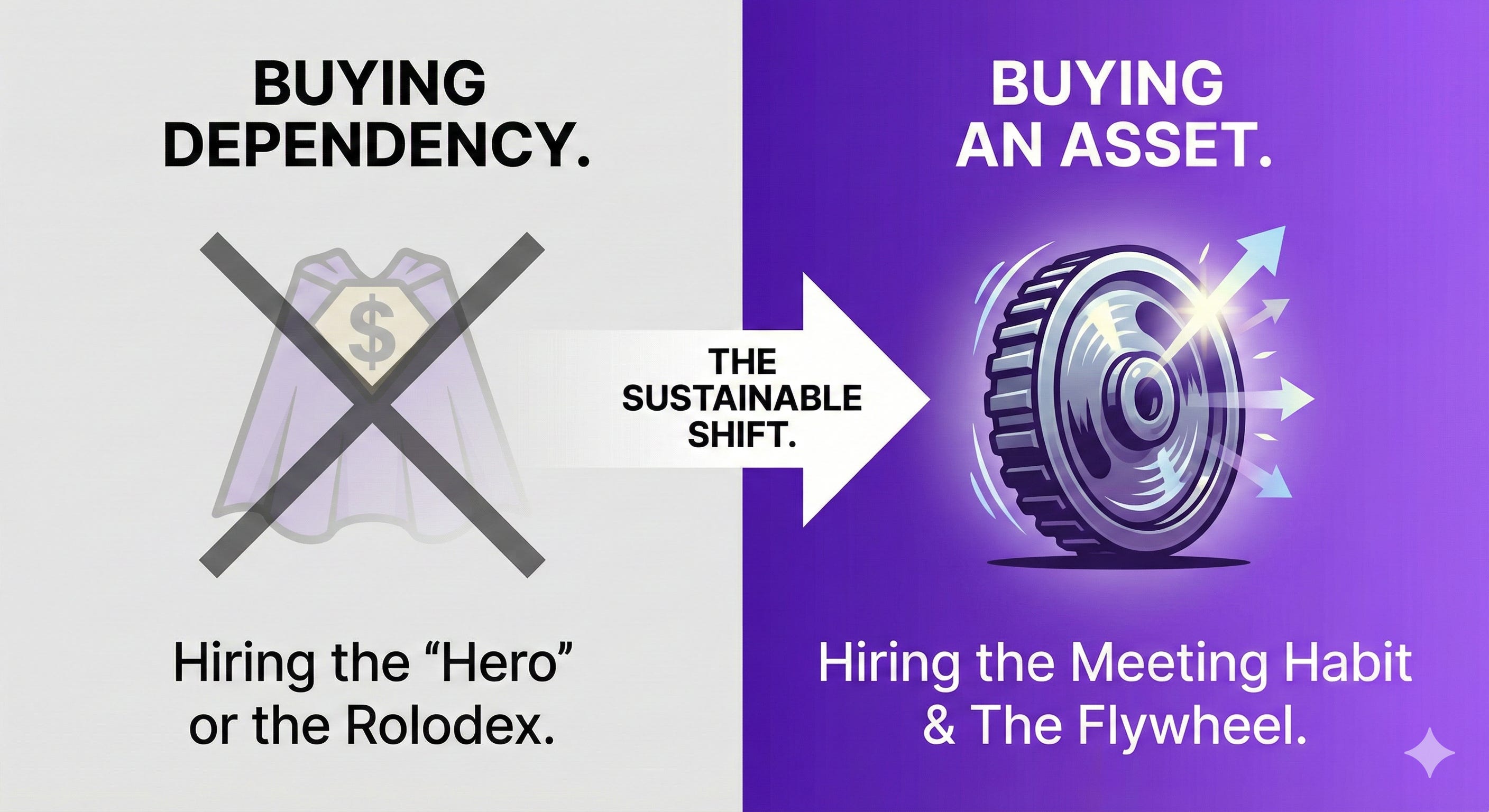
If a consultant’s value depends on them being the hero, you’re buying a dependency. If their value increases the organization’s capacity to execute without them, you’re buying an asset.
In fundraising terms: don’t hire the Rolodex. Hire the flywheel.
And if you’re a consultant: don’t sell the whale!
What you’re actually buying when you hire a great development consultant
If a consultant isn’t delivering a Rolodex, what are they delivering? A good one helps you find the opportunity you already have: your best donors are usually hiding in plain sight.

That includes existing major donors, but also mid-level donors, monthly donors, and long-time givers who have never been invited into a deeper relationship. These are people who are already saying “yes” to you, just at a level that may be far below their capacity.

Here’s what the work with a consultant like Robin typically looks like.
1) Wealth Screening and segmenting donors, so you can direct scarce time toward the people most likely to upgrade.
2) Systematizing outreach: outreach is follow-up. Follow-up is labor. Labor disappears when it doesn’t have structure.
3) Coaching on how to hold a great donor meeting and craft a powerful story about your work
4) Support for what comes before and after the meeting - briefing/preparing you and debriefing the meeting, capturing notes & next steps.
5) Providing accountability & supporting real movement: this is the part clients underestimate until they feel it.

If you want to learn more about Robin’s work, you can reach her at www.abundancecatalyst.org. And for ongoing movement fundraising tips, sign up here: https://abundance-catalyst.kit.com