



A strategic operating system runs on strategic operators—people who default to context, tradeoffs, and second-order effects. People who ask “why” before “how.”
Last week we named the need to get your hiring process set-up so that you can identify and hire the people who do this. Today we’re talking about what to do with the people you’ve already hired who don’t.
Start by identifying the non-strategic thinkers. If any of the below resonate with things you have thought or said, you know who they are:
“My employee does exactly what I asked — but it somehow completely misses the point; it’s technically correct, but it’s useless. What is going on?”
“They bring me every problem but zero thinking. They come in and dump it on my desk and wait. No options. No analysis. No recommendation. Just: “What should I do?”
“Their project hits a wall and they are genuinely surprised. How? That was the most obvious risk in the room.’
“When I ask ‘what else did you consider?’ I get a blank look.”
You know who they are, so what do you do next?
“I keep telling them to think more strategically, but nothing changes. It’s like they don’t ‘get it’?”
Nearly all of us have tried this move, and found that “nothing changes” 100% of the time.
And it never will.
Telling someone to “think more strategically” is like teaching someone to swim by describing water or handing them a violin and saying “play with more feeling” when they don’t even know how to hold it.
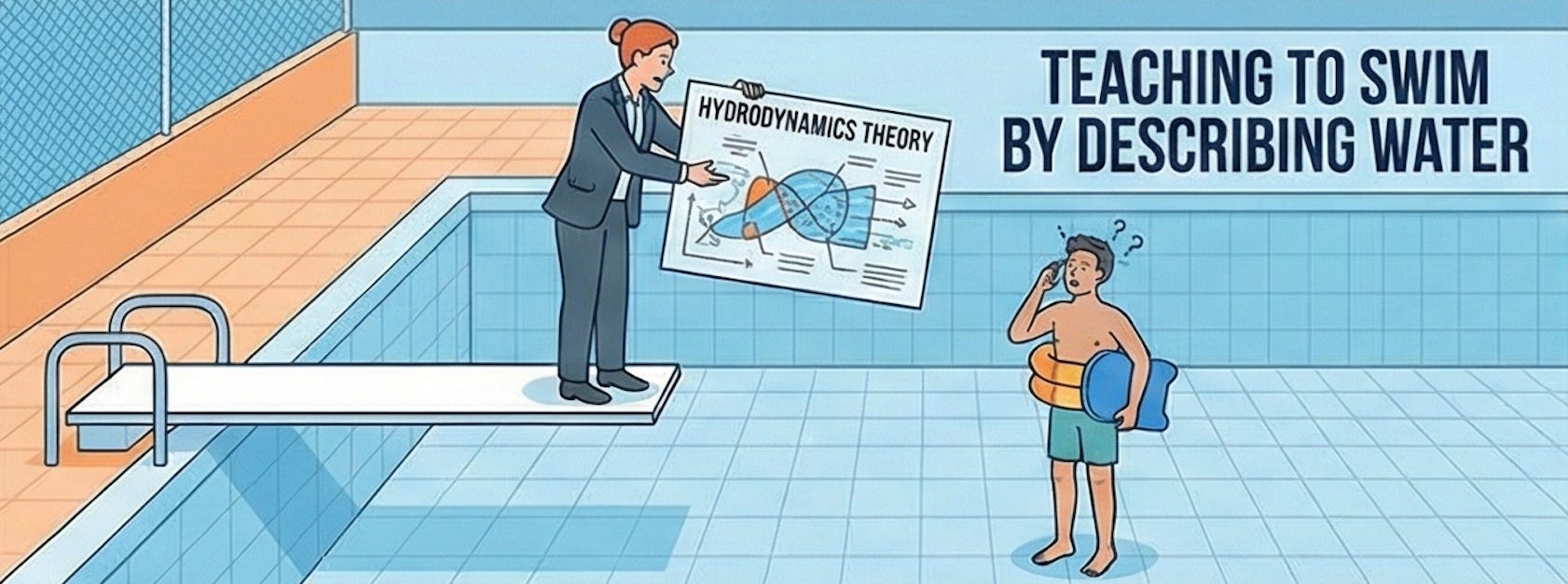
The problem isn’t effort — it’s conditions.
Strategic thinking isn’t a skill you can lecture into someone. Telling people to “think bigger” or “zoom out” is about as useful as telling someone to “be more creative.” This is all just frustration dressed up as feedback. What you are really saying is “I’m frustrated with what you’re doing and how you do it.”
Strategic thinking is developed through exposure, practice, and reinforcement – not through closing your eyes and tapping your toes together 3 times.
If you want your people to think more strategically, you need to build the conditions that make strategic thinking possible.
We will address this topic over two newsletters, and this is the first. Here’s the full framework we’ll cover:
Start with the mindset shift
Give visibility into strategy
Assign strategic challenges
Build skills through tools and frameworks
Use coaching and reflective questions
Give feedback on strategic thinking
Make strategic reflection a habit
In this article, we’ll dig into the first three — the foundational conditions.
1. Start with the Mindset Shift
Most employees operate from a simple question: What do I need to get done today?
Strategic thinkers ask a different question: What matters most for the bigger goal?
This isn’t a personality trait. It’s a habit — and habits can be shaped.
Your job is to interrupt the task-completion default and replace it with strategic curiosity. You do this through the questions you ask, repeatedly, until they start asking them without you.

Try these in your next 1:1:
“How does this task connect to our larger goals?”
“What’s the long-term impact if this goes well? If it doesn’t?”
“What would you do differently if you had twice the time? Half the time?”
The goal is to build the muscle of pausing before executing — asking why this and why now before diving into how.
(If you’ve been following this series, you’ll recognize this as the Pause Protocol applied to development: Pause–Breathe–Think–Choose. You’re teaching them to pause.)
2. Give Visibility Into Strategy
People can’t think strategically if they don’t know what the strategy is.
This sounds obvious, but it’s remarkable how often leaders expect strategic thinking from people who have no line of sight into strategic decisions. They’re executing in a fog, then getting dinged for not seeing the big picture.
If you want strategic thinkers, give them access:
Include them in strategic conversations — even as observers. Let them see how decisions get made, what tradeoffs get weighed, what information leaders use.
Share the documents — strategy decks, OKRs, board presentations, planning memos. Context changes how people think.
Debrief your decisions — “Here’s what we decided and here’s why.” This is one of the fastest ways to transfer strategic thinking: narrate your reasoning out loud.
The goal is to move them from “I do what I’m told” to “I understand what we’re trying to accomplish and can make judgment calls accordingly.”
3. Assign Strategic Challenges
Strategic thinking is a skill. Skills develop through practice as well as observation.
This means giving people work that requires strategic thinking, not just execution. The stretch is about the type of thinking the work demands.
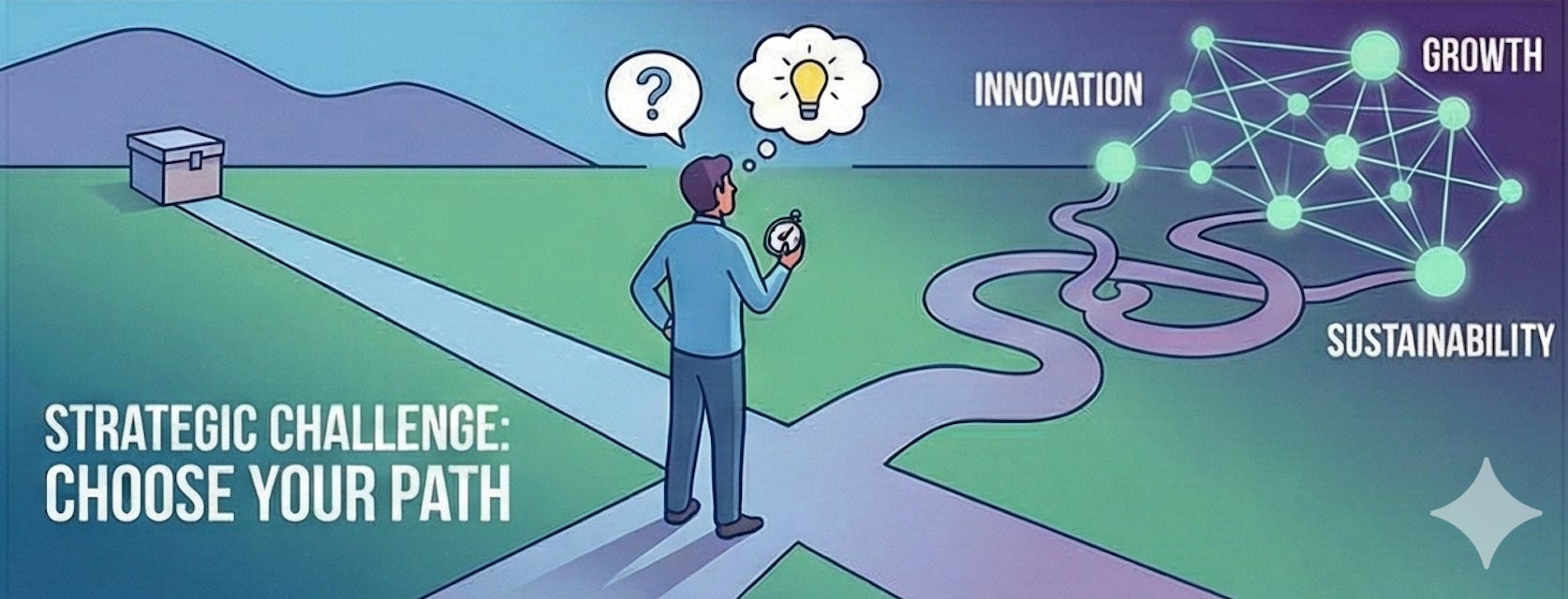
Ideas you can try with a developing strategic thinker:
Lead a small initiative with cross-functional implications
Research and present on an emerging trend that could affect your team’s work
Develop a proposal to improve a system, process, or workflow
Analyze a past decision — what worked, what didn’t, what would you do differently
The key: be explicit about what you’re asking for. Don’t just assign the project. Say: “I’m not just looking for a deliverable. I want to see how you think through this — the tradeoffs you weigh, the options you consider, the questions you ask.”
Then actually evaluate that. If you only praise the output, you’ll only get output.
What’s Next
You’ve now laid the foundation: a mindset shift toward strategic questions, visibility into how strategy actually works, and stretch assignments that require strategic thinking.
But foundations crumble without reinforcement.
In Part 2, we’ll cover how to sustain and deepen strategic thinking through tools, coaching, feedback, and reflection habits: all the infrastructure that turns a one-time development effort into a lasting capability.

Your move this week:
Pick one person on your team who you wish thought more strategically. Choose one action from above:
Ask a strategic question in your next 1:1
Invite them to observe a planning meeting and debrief it with them
Assign a small stretch project with explicit strategic expectations
Start there. See what shifts.
And we want to hear from you. Really we do.
If any of this landed with you—whether you’re in the thick of these challenges or you’ve developed strategies that work—we want to hear about it. We’re scheduling 20 minute conversations with leaders to understand what’s helping you stay grounded as a strategic operator and where you’re struggling. Your insights will shape how we build this series and similar future projects. Send us an email at Susannah@hookrodgersconsulting.com to get on the books.