


And we’re back. This is Part 2 in a 2 part series that introduces a framework for how you can take someone who “ just isn’t” and turn them into someone who is…a strategic thinker.
Quick preface: We heard from a number of people that they forwarded the last article (Part 1) to various employees / colleagues. If you are one of those people, please please please forward this one as well. Otherwise (see below) the first article didn’t matter at all.
Recap
Here’s the quick recap of what we covered in last week’s article (in more direct terms):
The majority of employees lack the ability to think strategically (that includes your staff which includes your c-suite).
You can do something about it. You can rewire someone else’s brain.
And you should, because:
This is a fundamental responsibility of leadership and management.
Because winning depends on it.
In Part 1, we covered the foundation: shifting mindset from task-completion to goal-clarity, giving people visibility into strategy, and assigning work that requires strategic thinking — not just execution.
The steps laid out in Part 2 are based on the fundamental truth of people-based systems: foundations erode without reinforcement.
Tell us where you want us to dig in and how to best support you.
We’re confident that we can. Send an email to Susannah@hookrodgersconsulting.com. Paragraphs or bullets welcomed. Please don’t spend a second on formatting, just get it to us.
Real Life Hits
You do steps 1-3. It feels good. You feel good. Your staff person feels invested in and starts to feel the synapses stretch. And it works for a few weeks, and then the pressure of daily operations takes over. Your promising strategic thinker reverts to reactive mode, because you did. The stretch project gets deprioritized. The big-picture questions disappear from your 1:1s because…Because.
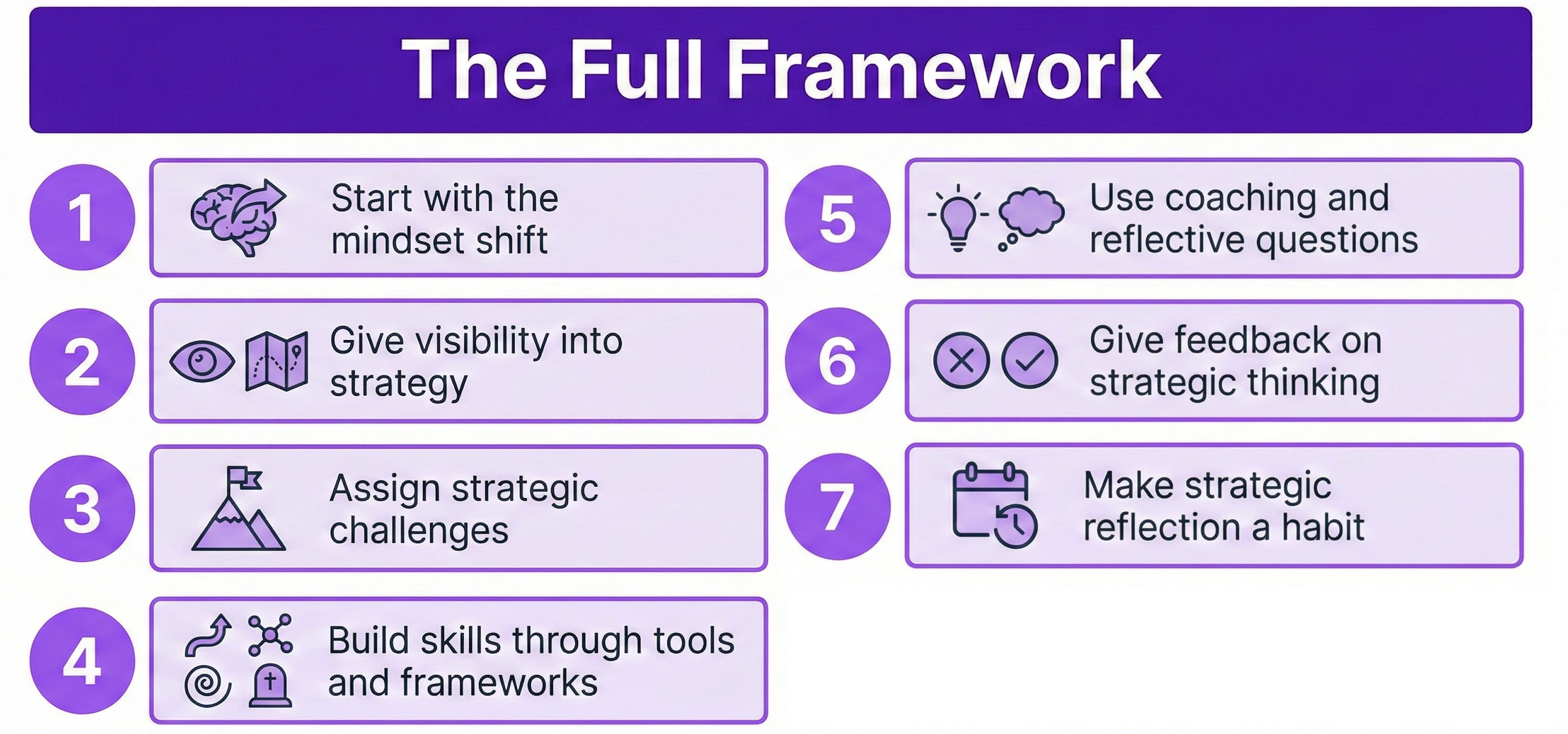
This article covers the infrastructure that makes strategic thinking stick: tools, coaching, feedback, and habits. We are going to cover the four remaining elements of the framework after covering 1-3 in last Thursday’s post:
Let’s dig in.
4. Build Skills Through Tools and Frameworks
Strategic thinking feels abstract until you give people concrete ways to practice it.
Frameworks slow the brain down and force structured consideration of factors that reactive thinking skips over.
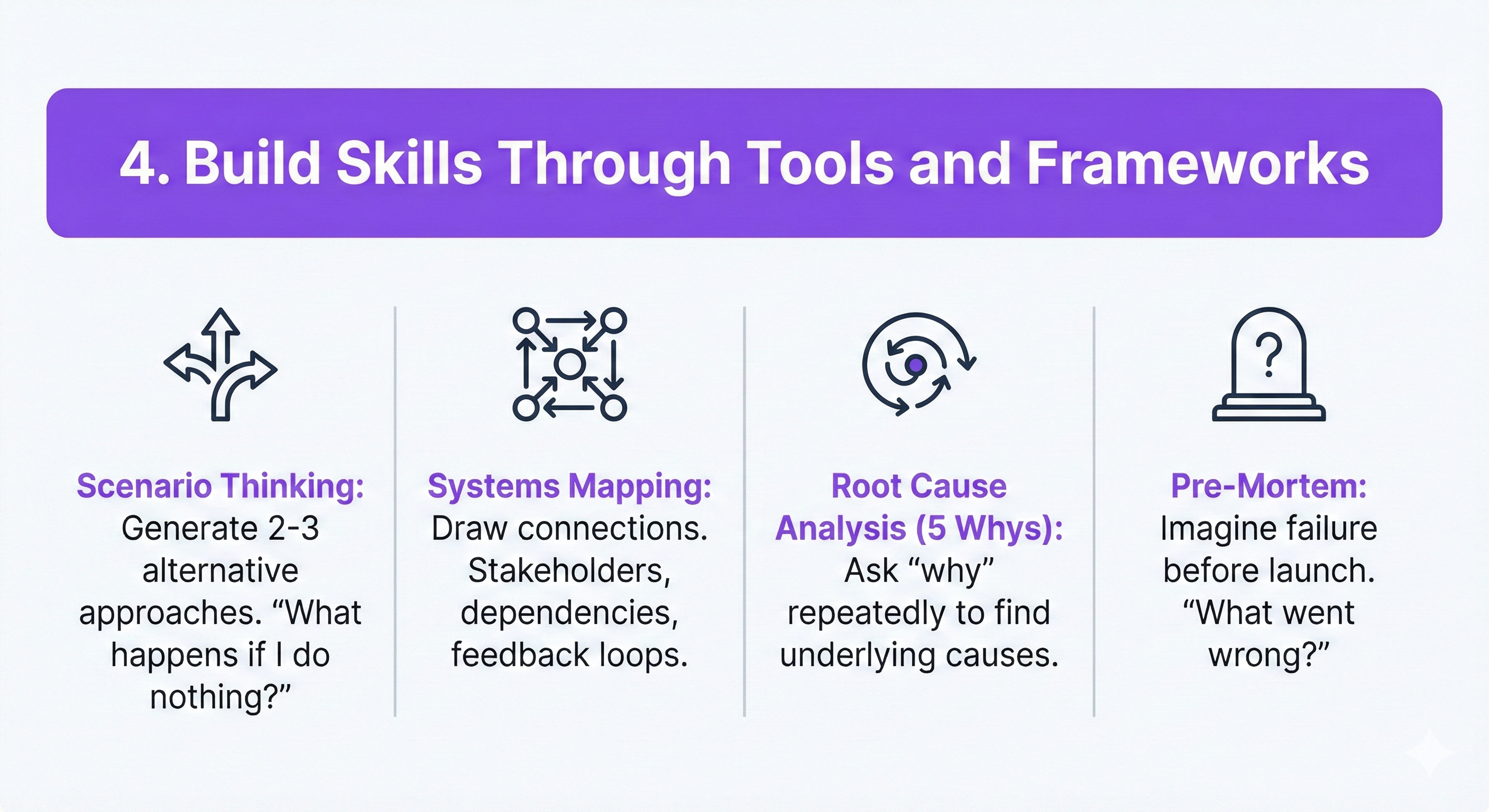
A few worth teaching:
Scenario Thinking: When facing a decision, generate 2-3 alternative approaches before acting. Ask: “What happens if I do nothing? What if I go the opposite direction?” This builds the muscle of seeing options rather than defaulting to the first reasonable path.
Systems Mapping: Draw out how the parts of a problem connect. Who are the stakeholders? What are the dependencies? Where are the feedback loops? This helps people see ripple effects before they create them.
Root Cause Analysis (5 Whys): Keep asking “why” until you get past symptoms to underlying causes. Most reactive decisions solve the wrong problem because they stop at the surface.
Pre-Mortem: Before launching an initiative, ask: “Imagine this failed. What went wrong?” It’s easier to see risks when you’re not defending a plan you’ve already committed to.
The key: don’t just teach these in a workshop and hope they stick. Assign them. “Before our next check-in, I want you to map out the stakeholders and dependencies for this project.” “Run a quick pre-mortem on this proposal and bring me the top three risks.”
Make the frameworks part of how work gets done, not a separate intellectual exercise.
5. Use Coaching and Reflective Questions
Strategic thinking is often caught, not just taught.
The questions you ask shape how your people think. If you only ask “Is it done?” you train for task completion. If you ask “What did you consider?” you train for strategic thinking.
Build these into your regular conversations:
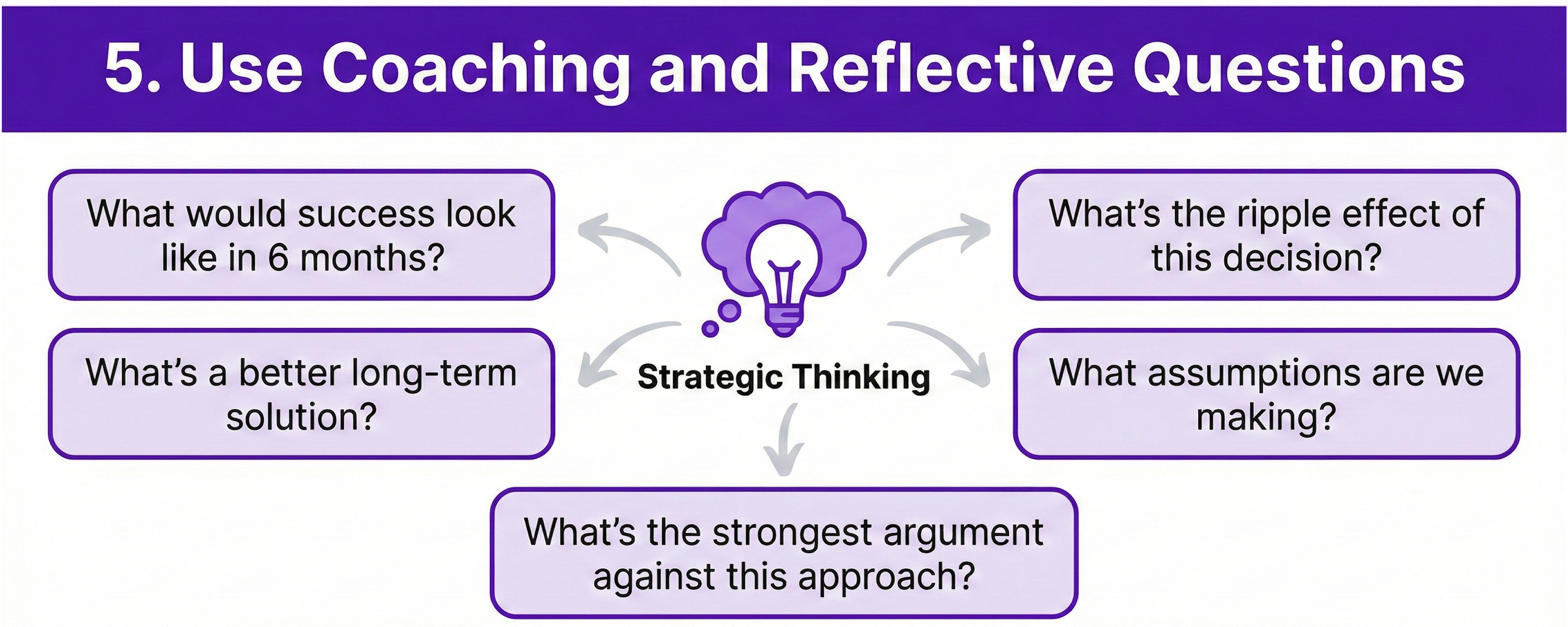
The discipline: let them answer. Sit in the silence. Don’t rescue them with your own thinking. Then build on what they offer.
You’re training their internal voice to ask these questions when you’re not in the room.
6. Give Feedback on Strategic Thinking
Most feedback focuses on outcomes: Did you hit the deadline? Was the deliverable good?
If you want strategic thinkers, you need to give feedback on the thinking, not just the results.
Be specific:
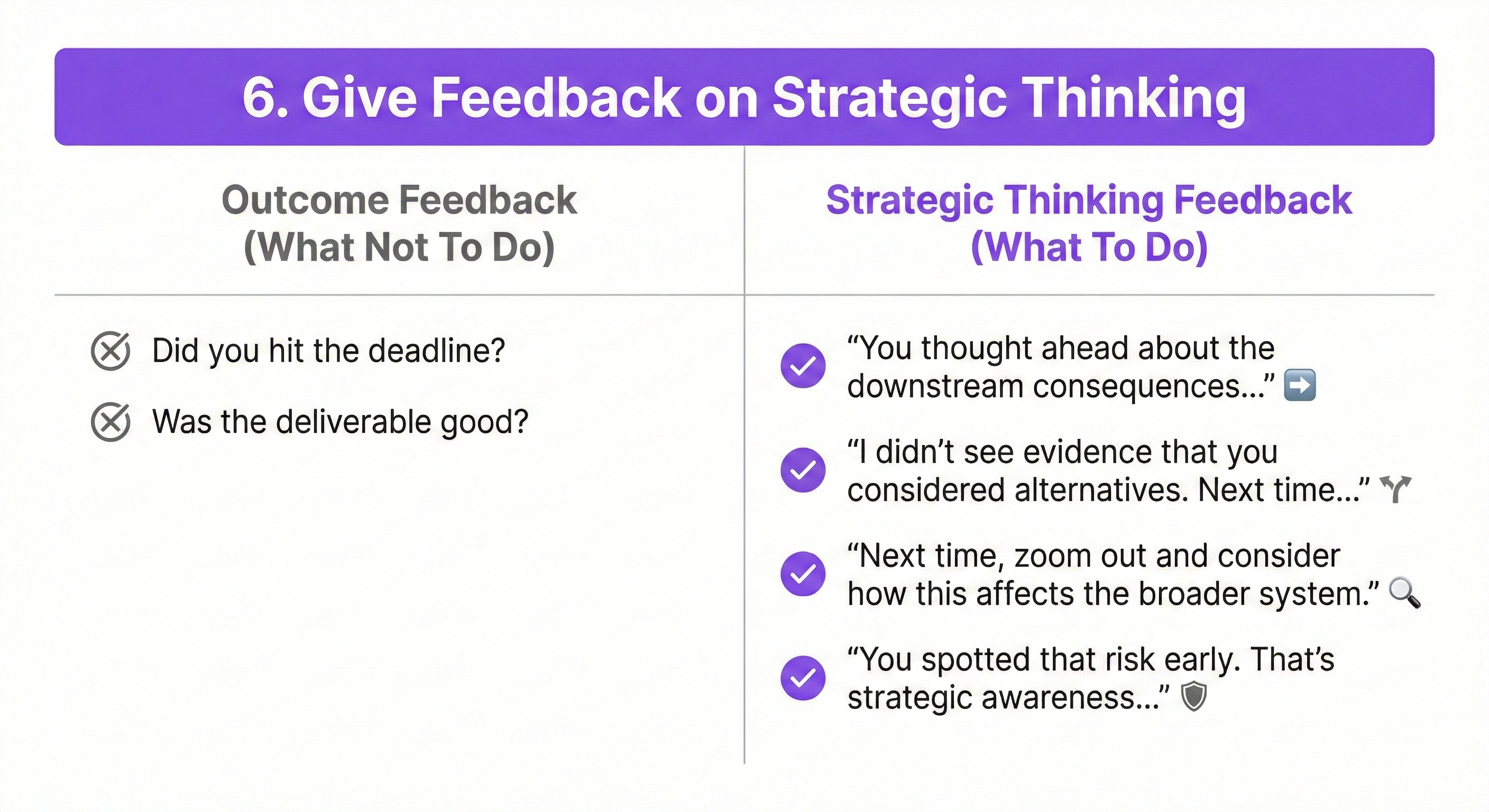
Praise effective thoughtful planning, not just task completion. Call out when someone anticipates a problem, considers tradeoffs, or asks a clarifying question that changes the direction of a project.
What you reinforce, you get more of.
7. Make Strategic Reflection a Habit
Strategic thinking a practice.
Help your people build reflection into how they work:
After-action reviews: What worked? What didn’t? What would we do differently? Did we think long-term? This isn’t about blame — it’s about learning.What worked? What didn’t?
Weekly check-ins: Spend five minutes asking:
“What’s one thing you did this week that was reactive? OR “Where did you catch yourself thinking reactively”
“How do you know it was reactive?”
“What was the thought process that led up to that?”
What was the thought process that reflects that?
“What’s one thing you did this week that was strategic?” OR “Where did you catch yourself thinking strategically?”
“How do you know it was reactive?”
“What was the thought process that led up to that?”
The act of categorizing builds awareness.
Pre-work for 1:1s: Shift the meeting from status updates and do-out mentality to real development and a useful spend of time for both of you.
Ask them to come prepared with one strategic observation or question and then workshop the observation or question.
The goal is to make strategic thinking the default, not the exception. That only happens through repetition.
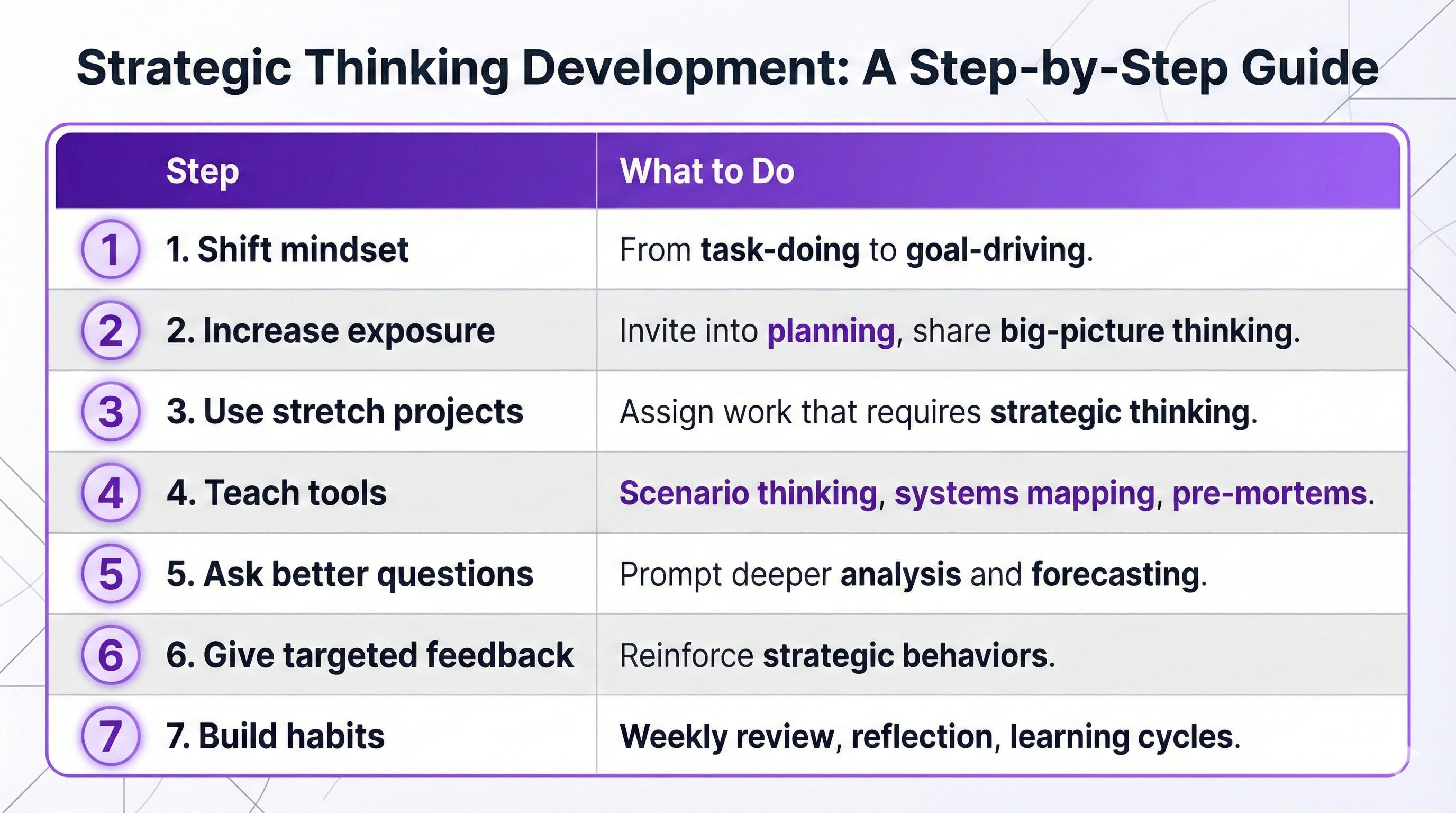
The Full Framework
Here’s what we’ve covered across both articles:
Your move this week
Pick one element from this article and put it into practice:
Assign a framework to a current project (”Run a pre-mortem and bring me the top risks”)
Ask a coaching question in your next 1:1 and resist the urge to answer it yourself
Give one piece of feedback specifically about someone’s thinking, not their output
Add a reflection question to your team’s regular rhythm
Strategic thinking is a skill. Skills are built through practice. Your job is to create the conditions where that practice happens.