



One of my favorite parts of writing this newsletter has been the community that’s grown around it: people who share feedback, offer resources, and often remind me why I started this in the first place. Some are longtime friends, but others, like Maya Kurien, I’ve met entirely through this Substack community. (My very first newsletter was about the value of community and captures the ethos of this Substack well!)
When we spoke, Maya was in the midst of launching her new public affairs firm, Main Street Wisdom. She’s a former government official and nonprofit leader who, like many of us, has had to navigate the shift from being “part of something big” to standing entirely on her own. Our conversation revealed insights about professional identity I think many of us in the consulting world will find familiar.
About Maya
Let me tell you about Maya first. Maya Kurien is a relationship-driven strategist with over a decade of experience navigating New York’s complex civic ecosystem. She’s worked at the intersection of government, advocacy, and real estate, as Executive Director of Government Affairs at NYC HPD and as Vice President of Advocacy at the Real Estate Board of New York.
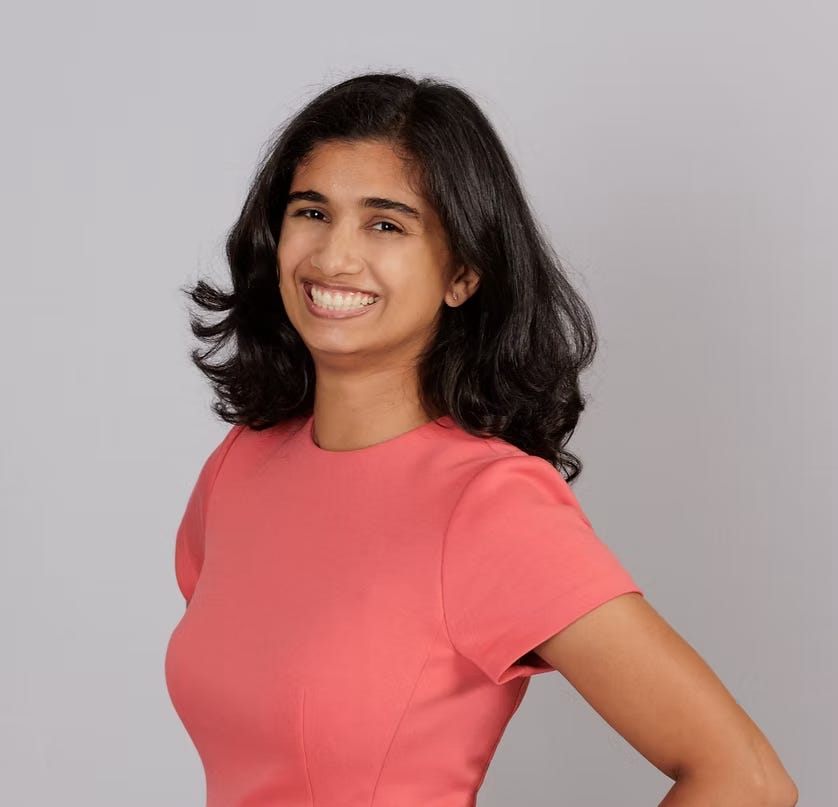
She’s helped move hundreds of millions in tax incentives, launched innovative 501(c)(4) initiatives, and earned recognition on City & State’s NYC 40 Under 40 and Asian Trailblazers lists. Even beyond Maya’s resume, what stands out is her ability to bring unlikely stakeholders together to make change happen.
Maya laughs when she calls herself a “recovering bureaucrat,” but it’s clear that her years in government shaped her understanding of how to get things done. “You learn fast that relationships matter more than titles or hierarchy. Whether it’s getting someone to stamp an application or moving a legislative agenda, it all comes down to trust.”
That philosophy — that relationships are the real infrastructure of impact — now anchors her consulting work.
The Identity Shift
Maya’s journey to independent consulting began with a layoff.
She’d been a senior leader in both city government and industry, but suddenly she found herself without an organization or a title to lean on.
“Before, when I met someone, I’d start with my title,” she said. “I was Vice President of X at Y. My identity was built around that title and where I worked.”
This resonated with me. I spent 11 years at the same nonprofit, and my identity was deeply intertwined with my role there. Every organization holds itself together through its culture and stories. For example, at the nonprofit where I served as Chief of Staff and Senior Vice President, a bedrock story for all of us was that we did the hard things in the social change world that no one else wanted to do. On the one hand, these stories get everyone rowing in the same direction and provide meaning and purpose. On the other hand, in most work environments, they obviate the need to figure out meaning and purpose for yourself.
For Maya, losing that framework forced a reckoning.
When I became an independent consultant, I had to go back to basics. What do I like to do? What am I passionate about? What’s the common thread that runs through everything I’ve done?
She described the early months as both freeing and disorienting. Inside large organizations, there’s rarely time or permission to ask those questions. The culture and mission provide meaning; you don’t have to define it yourself.
“There are so few pockets where you can think about who you are outside your role,” Maya reflected. “You just don’t have to — until you do.”
Rediscovering the Undervalued Assets
As she built her independent practice, Maya began to see her experience in a new light. “I didn’t realize how much I’d learned until I was no longer there” she told me.
In particular, she rediscovered how her government background had honed skills that translate powerfully into consulting: diplomacy, communication, and emotional intelligence.
“Government is a field where relationships really matter,” Maya said. “You remember the ‘please,’ the ‘thank you,’ the ‘help me help you.’ You remember when someone’s kind, and that makes you want to work with them again.”
That people-first philosophy now defines how she runs her business and how she wins clients. Maya’s approach is grounded in civility and trust, qualities that might seem old-fashioned but have never been more necessary.
The New Playbook for Work
Talking with Maya reminded me of a question she asked me that I ended up writing a whole separate newsletter about. She wondered how different it really is to sell a service, like consulting, versus a product, like the software my team and I build at Chorus. The more I thought about it, the more I realized how similar they are. In both cases, there’s always someone else offering what you offer: another firm, another founder, another capable professional with a polished pitch.
What actually sets you apart isn’t the service or the product. It’s how you make people feel. Whether you’re a consultant helping a client navigate chaos or a company supporting a customer through implementation, success still comes down to trust, responsiveness, and care.
That idea — that relationships are the true competitive advantage — brought us back to something Maya said that’s stuck with me ever since: we’re all writing a new playbook for work.
More than one thing can be true at once. You can be a consultant and still crave the stability of a job. You can hold a lot of headspaces at once — it’s anxiety-inducing, but it’s also freeing.
She’s right. We’re all figuring out how to work differently, mixing consulting with passion projects, freelancing while job-hunting, balancing creative freedom with financial pressure. The old idea of a “career path” doesn’t really hold anymore; it’s more like a web. It’s messy, but it’s also full of possibility.
Maya’s firm, Main Street Wisdom, reflects a shift happening across our community: people building businesses around collaboration instead of competition, and redefining stability as something you create for yourself, not something handed down by an organization.

Maya partners with other freelancers and experts — a “consortium model” — to deliver tailored, affordable solutions. It’s a collaborative model she predicts will define the next decade of consulting. “We’re writing a new playbook,” she said. “This is the gig economy, even for people with long résumés. Every field now requires you to diversify your income and your career path.”
The next era of work isn’t about job titles or org charts. It’s about networks of trust — the kind of relationships that make both consulting and entrepreneurship possible. In that sense, Maya’s “new playbook” isn’t really new at all. It’s a return to the fundamentals: empathy, follow-through, and showing people you actually care.
MORE ABOUT MAIN STREET WISDOM

Main Street Wisdom is a New York-based public affairs and advisory firm built for the 21st century. We support mission-driven organizations in turning complex policy and big ideas into lasting results. We do so by bringing real-world, community-rooted insight to complex political, economic, and organizational challenges while working within a network of trusted partners to achieve our goals. MSW specializes in Public Affairs & Policy Strategy, Nonprofit & Organizational Management, Digital Advocacy & Communications, and Strategic Project Management. Interested in collaborating? Reach out at mainstreetwisdom.com or hello@mainstreetwisdom.com.
Living with Uncertainty
Despite her early success, Maya is candid about how fragile it can feel.
“There are nights I freak out,” she admitted. “This could all fall apart tomorrow. Every day someone’s getting laid off, someone else is becoming a consultant. There are so many talented people out there.”
But she’s also cautiously optimistic. The work has pushed her to grow in ways a salaried job never did. “I’ve had to get better at business development, at setting boundaries, at saying no. I’ve learned to negotiate for myself — not on behalf of a boss or a brand.”
The vulnerability that comes with independence, she says, also breeds resilience.
Even if everything ended tomorrow, I’ve learned more about myself through this process than I ever did inside an organization.
The takeaway: Your value isn’t in your title or your organization. It’s in the combination of empathy, systems savvy, and problem-solving grit you bring to each new context — the same mix that built your old career will power your new one.
Help write the “Working With Consultants” White Paper (for nonprofits)
Let’s write a resource for nonprofits that demystifies how to scope, select, and succeed with consultants. It would cover things like pricing norms, realistic timelines, governance, equity in hiring, and what actually drives outcomes.
Want to contribute? Add your name here and we’ll spin up a short kickoff call + outline.
→ Sign up to contribute to the White Paper
Sections we’re considering:
When to hire a consultant (and when not to)
Budgeting and pricing models (incl. retainers, fixed-fee, hourly)
RFPs vs. relationship-driven sourcing (equity tradeoffs)
Decision cadence and stakeholder roles
Data access and security baselines
What good looks like: case snapshots (wins and misses)
We’ll keep it practical and open-source the template so folks can adapt it.
Until next time,
Sam