

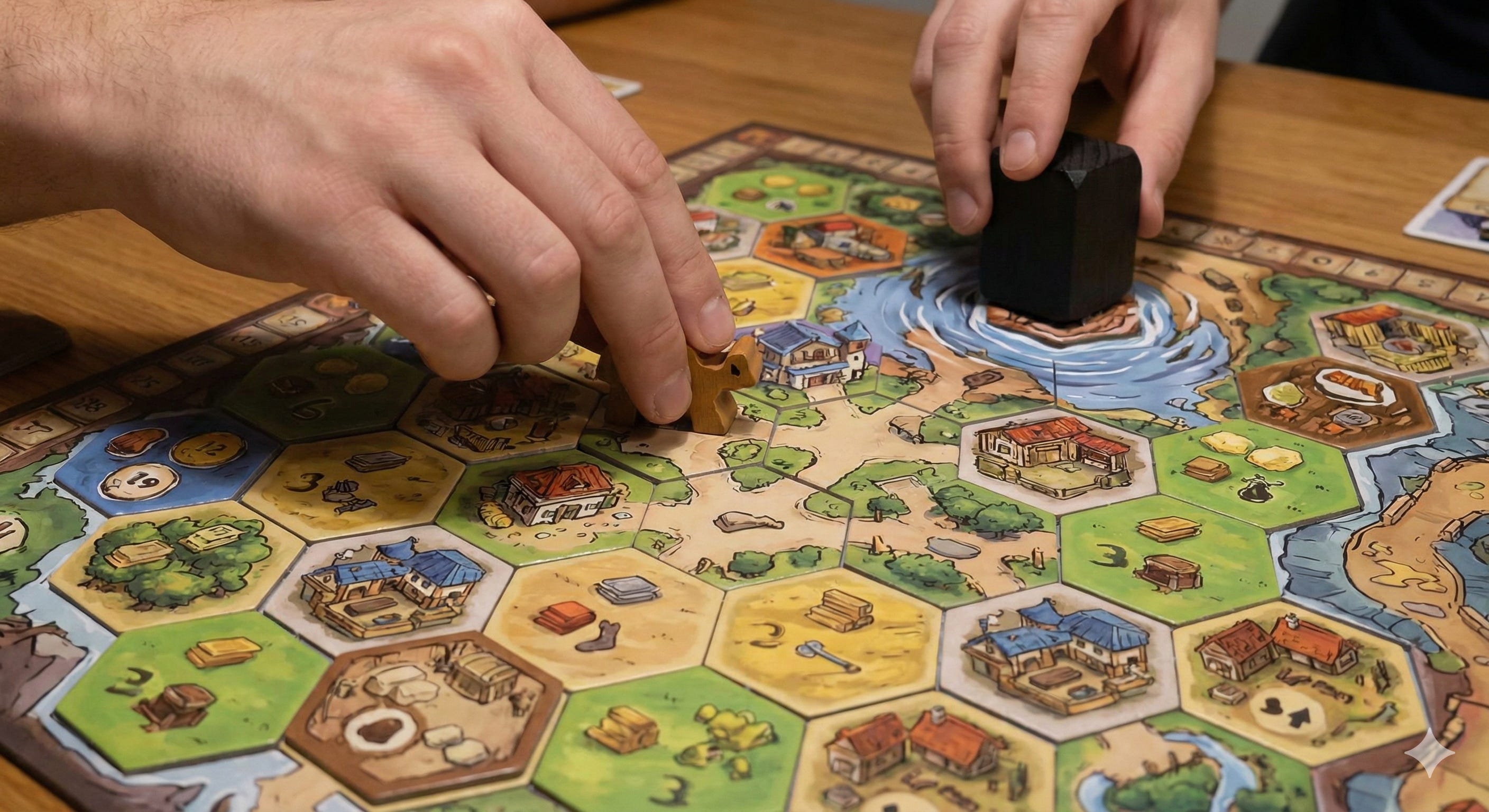
I like board games for the same reason I like consulting: the board changes faster than my plans.
In a game, I can make a clean, logical move and still get blocked two turns later. Someone takes the space I wanted. Someone hoards the resource I assumed would be there. The “best” path collapses because another player exists.
For a long time, I didn’t carry that lesson into my career. I treated the path I was on as the path.
Then I left.
Here’s my thesis: I try to “bet on myself” only after I’ve built enough options that the bet is survivable and the upside is meaningful.
Options are a career asset
By options, I mean real next steps I can take without pretending: alternative roles, credible skills, relationships that create opportunities, and enough financial runway to say no.
A concrete example: if one client pauses work, “having options” means I can replace that revenue with another engagement or a different offer I can deliver. I don’t want to be in a spot where that means panicking, discounting work, or crawling back to the nearest W2 job I can tolerate.
I didn’t always have that.

What 14 years in one place taught me
I started at Green Corps after college. The organization (and its parent network) shaped most of my adult life. I learned how to run programs, lead teams, and operate inside a clear mission.
I left in 2020, about 14 years after I started. The hardest parts about leaving was that I hadn’t built many doors out.
My community was tight and mostly internal. My professional identity was specific. My default “next move” looked like doing the same job somewhere else.
I stayed so long that I stopped practicing the skill of creating choice. This isn’t a complaint about that chapter. It’s just a cost I didn’t see while I was paying it.
A New Report Coming
We’re launching a Strategic Fitness Survey to understand how nonprofits make decisions and implement strategic thinking practices. It takes less than 10 minutes to complete, and we invite nonprofit staff, leaders, board members, and consultants to share their experiences. Your participation will help build a comprehensive picture of strategic practices across the sector, with findings to be published in early 2026. Please take the survey and share it with your network to help us gather diverse perspectives. Please contribute to our survey!
The board-game heuristic I now trust
My favorite board game is Agricola. When I’m playing, I try to make moves that keep multiple good lines open.
By preserving options, I mean choosing the move that increases the number of decent plays available next turn, not the move that commits me to one fragile plan.
To geek out for a second, I won’t get so laser-focused on building a hearth that I take a measly amount of clay when there is a ton of wood on the board that no one has claimed. I’ll take a resource that supports three future builds instead of the resource that only helps with the one build I’m currently imagining. If someone blocks my first idea, I still have two others that work.
Career-wise, consulting became my version of that move.
Consulting rebuilt optionality
When I started consulting, I got a few full-time offers right away. They were from people I really liked and respected doing meaningful work that I was well-suited for. I turned them all down.
After being so long at one organization, I felt like W2 roles can compress options fast. They create a default schedule, default incentives, and a “this is what I do now” identity that’s hard to unwind. Especially for me, since I tend to give all of myself to things.
I needed to be in a situation where my main job was rebuilding optionality — skills, network, confidence in unfamiliar work — before I committed all of myself to something again.
Consulting did that. It also did something else.
It gave me room to bet on myself.
By betting on myself, I mean taking on work where my upside depends on my growth and ownership, not on showing up as a known quantity.
The Chorus bet started small
Chorus is a great example. Chorus started as a conversation with my friend Aaron, who was also a consulting client at the time. He was looking for something new. We kicked around ideas.
Then I noticed a shift: I didn’t just think the idea was good. I wanted to build it.
I didn’t jump in with a dramatic declaration. I asked for a small role. That “toe-hold” mattered. It let me participate without overcommitting before the work had proven itself.
Then the work started. I liked it. I helped. Aaron saw that I could carry weight. My involvement expanded, and now I’m the COO. I had never been part of a software company before, and it involved more new things than I could have imagined.
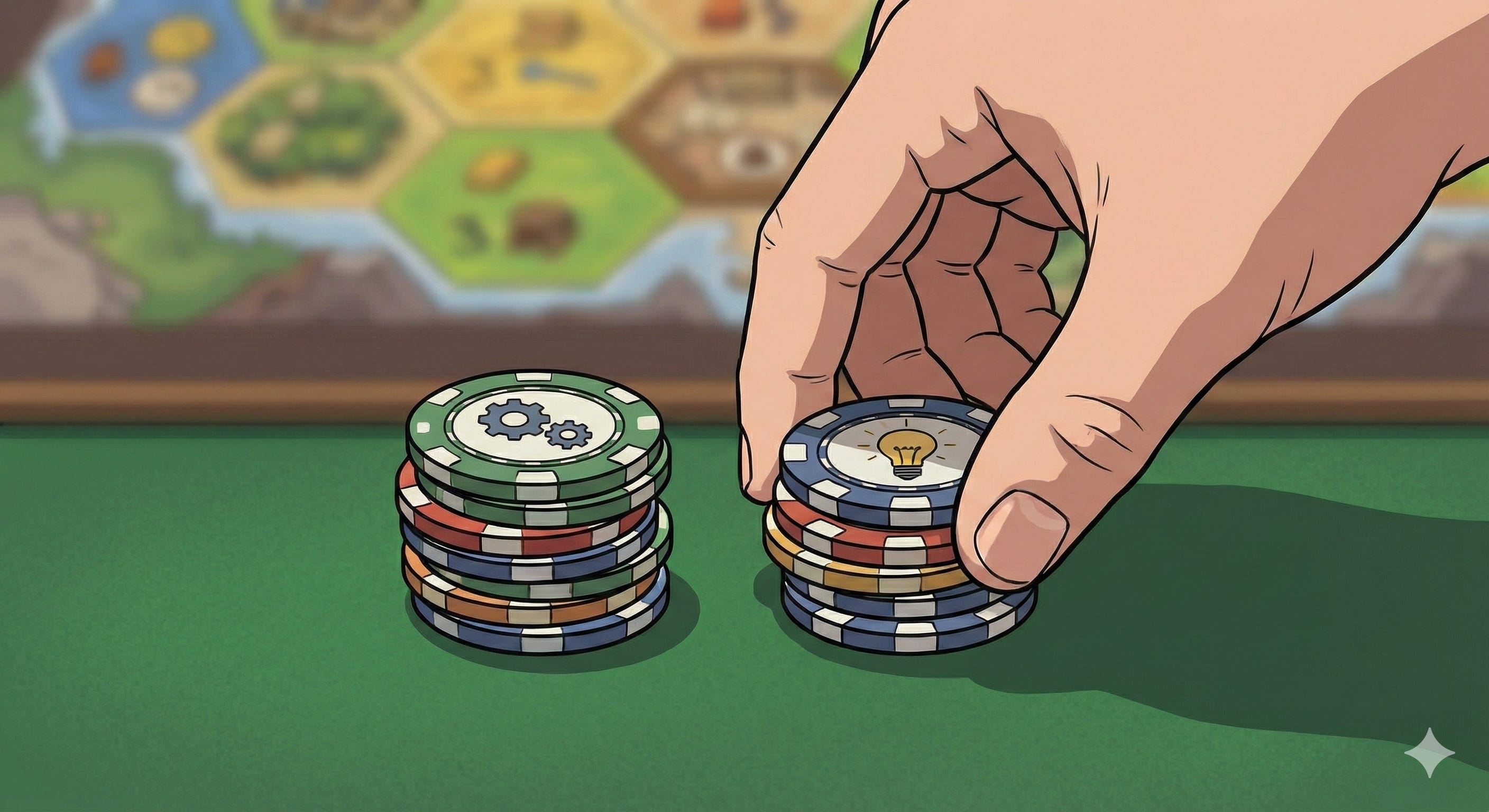
But I bet on myself, and the bet worked because it was sized correctly at the beginning and then increased as the evidence improved.
A bet that didn’t pay
Not every bet does.
An acquaintance once reached out about a new nonprofit idea. They hadn’t raised money yet, but they expected they could. I offered to contribute a small amount of work up front, with the expectation that if funding came through, we’d formalize and I’d get paid.
Well, I did some work, and I never got paid.
Early-stage plans evaporate all the time, even when people are sincere. I have zero hard feelings about it!
And I realized that “betting on myself” is not the same as “working for free.” It only makes sense when the structure protects my downside and the upside is plausible. In this case, the downside wasn’t so bad, but the upside probably wasn’t enough for this to have been worth it.
Counterpoint: commitment beats optionality
A fair counterpoint is that preserving options can turn into avoidance. The “steelman” version of this point of view goes like this.
Some careers reward depth more than flexibility. Repeatedly keeping doors open can become a way to dodge the hard work of committing, building a reputation in one lane, and compounding skill over time. There’s also a social cost: people can’t place you, and that makes trust slower.
I buy a lot of that.
My response is that I’m not aiming for maximum optionality. I’m aiming for enough optionality to commit without fear driving the commitment.
I’m striving for a balance where optionality is a means, not the goal. Betting on myself has become a way to embrace that optionality, too.

What this changes for me now
I now treat optionality like a balance sheet item.
If my options are thin, I bias toward rebuilding them: widening network, shipping work in new contexts, protecting runway.
If my options are healthy, I bias toward commitment: taking on roles where ownership and learning create asymmetric upside.
A decision rule I use
When I’m deciding whether to keep consulting, take a job, or go deeper on a venture, I use one rule:
If the downside would trap me, I build options first.
If the downside would sting but not trap me, I place a small bet and learn fast. Then I increase the bet as the evidence comes in.
Open questions
These are things I still think about and might be helpful to you, too!
Where’s the line between “preserving options” and “avoiding commitment” in my own decisions?
What option-building work do I keep skipping because it’s boring (relationships, writing, systems)?
How do I structure small bets so they don’t quietly become unpaid obligations?
What kinds of commitments actually create options later, instead of reducing them?