


Hi everyone,
Only one newsletter this week, what with it being Election Day on Tuesday. We’ve also got something new coming next week that I’ve been working on and want to give you a preview about.
Am I The A-Hole?
Today’s mini-newsletter is inspired by something I said to my cofounder earlier this week. He shared how he was feeling highly stressed. In response, I said he should adopt my meditation practice.
I meant it, because I do have a daily meditation practice that has brought me a lot of benefits! But I also had that instant pang of regret as I thought, “Am I being an a-hole?” He was just sharing how he was feeling, not requesting unsolicited advice. We know each other well enough that he took it in stride. But now I feel like I owe it to him to write a little about it.
I can point to significant ways meditation has helped me. I am not an expert, but I have been meditating nearly every day for almost a decade. I also try to do a weekend meditation retreat at Blue Cliff Monastery annually.
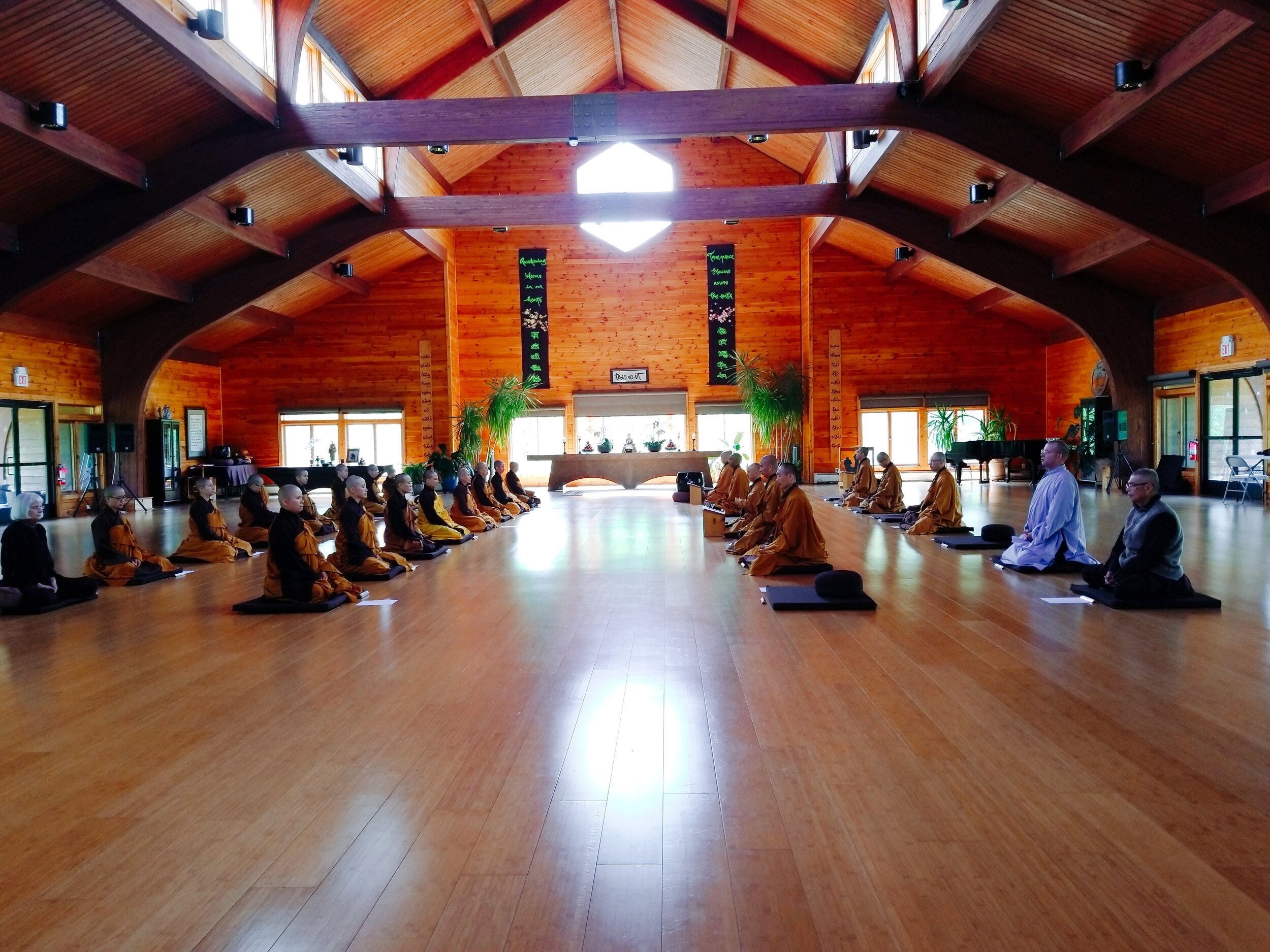
Many people who do not meditate, or who have tried it a few times but stopped, share that the reason is they don’t know what to do or why to do it. What is supposed to be happening when I meditate?
If you’re one of those people, then this is for you! I will start with the why, then give you the steps I followed to build a daily meditation practice.
What meditation does for me
When I started meditating, I did it to handle stress during a difficult period in my life. I didn’t know much about meditation at the beginning. I thought it might have salubrious physiological effects like lowering my blood pressure. Or perhaps I’d cultivate a sense of zen. I wasn’t sure.
One immediate benefit I noticed from my first attempt was meditation forced a pause in my day. I usually do just 10 minutes of meditation on an average weekday. That isn’t a lot (less than 1% of your minutes!), but it’s so countercurrent that its impact is magnified.
Stopping is huge! But you can also accomplish this by taking a walk or reading a chapter of a book. Why is meditation different?
I can only explain this with a metaphor.
When I meditate, I feel like I’m stepping off of the stage and into the audience.
We’re performing roles all day. I don’t mean “perform” in the sense of artifice. I mean “perform” in that we need to rise to the occasion. I need to perform at work, as a partner to my spouse, in taking care of my home, as a friend or family member. These performances require us to exert effort and to exhibit, magnify, or sometimes muffle how we’re feeling.
Like actors in a play, we inhabit these parts and roles and are melded completely with them. (Pretend we’re serious Daniel Day-Lewis style method actors!)
Meditation allows me to step off the stage briefly and take a seat in the audience. From that vantage point, I have the perspective to analyze the performance as a critic. I am able to part from myself, briefly, and observe.
What I’m observing is everything happening in my brain. I usually observe my deepest feelings. Sometimes, I notice something I’ve been feeling but have not identified yet.
The result of my meditation practice is getting to know myself better. “Know thyself’ was written at Delphi, and if it was good enough for Apollo, it’s good enough for me.
What worked for me when I started
I’ve tried a few different methods of meditation. Mindfulness meditation, as taught by Thich Nhat Hanh, has worked best for me.
I’d start by getting a very short book: How To Relax. The art is lovely, and it has some aphorisms and wisdom in less than 100 pages. But most importantly, it has some words to guide you in your meditation in the back of the book.
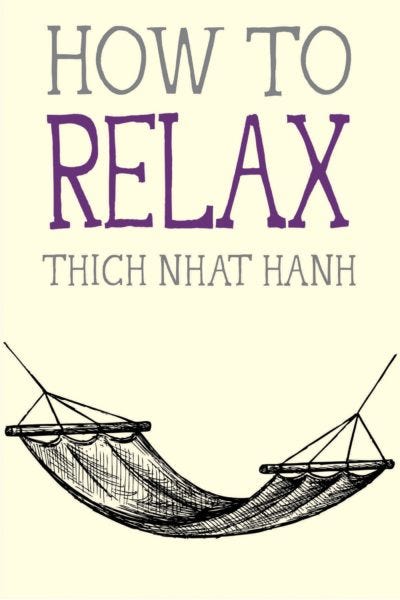
The words are short phrases like, “Breathing in, I know I am breathing in. / Breathing out, I know I am breathing out.” They provide a way to focus while also giving you the directions on what to do! You’re just breathing in and concentrating on your breath.
Your breath and cultivating mindfulness of your breathing is a major component of this style of meditation. Eventually, you can also practice things like mindful eating and mindful walking. It’s great.
Another thing I’d do is download the app Insight Timer. It is free. You can try guided meditations on it – I’ve done some, and it was interesting trying out other styles.
But I use Insight Timer to create my own meditation. I start with a bell (many meditation practices begin and end with a bell sound), then have two more bells at later intervals to bring me back to my meditation if I have wandered. I like to have a sound like rushing water, too, since I live in Brooklyn and it’s loud. Insight Timer does all of this.
I wouldn’t make it more complicated at your start. Concentrate on your breath – feeling it, listening to it, embodying it – and use the mantras from How To Relax for 10 minutes a day. Don’t look to feel anything or achieve something. The practice is the purpose.
If you’re ready for more, check out the other Mindfulness Essentials books from Thich Nhat Hanh. I also recommend going to a monastery near you for a weekend retreat. Many offer retreats with meals and lodgings. They’ll provide some teaching on meditation and guided practice, which can give you new things to try. Plus, sitting for 45 minutes or an hourlong meditation is a different experience!
Hopefully this gives you some simple ways to get started if you’ve been interested in meditating but haven’t yet gotten into a daily routine. Good luck, and let me know how it goes!
Preview: Strategic Thinking, Made Practical
I’m really excited for something new that commence launch next week and we will run here for the next few months: a series on cultivating strategic thinking in nonprofits, consultants, and the broad social change movement.
To do that, I’ll be partnering with my longtime friend and colleague Susannah Hook-Rodgers. I’ve known Susannah for 18 years since we worked at Green Corps together, and she’s just amazing, having served in executive leadership roles at MoveOn, Indivisible, Citizen Engagement Lab, and more.
But now, Susannah is focused on Hook-Rodgers Strategic Coaching & Consulting, which she created because of what she experienced firsthand as an executive leader: folks becoming trapped in a cycle of perpetual doing while experiencing an increasing anxiety that the enormous level of output, from themselves and their teams, wasn’t building toward, but was instead perpetuating a culture of maintenance, not progress. Provocative words, and a great launch point for this series.
You can expect downloadable guides and resources, weekly newsletters covering specific topics in-depth and providing training and guidance, and a major report we’ll be creating with your help.
The first part in this series is coming next week in an email from Susannah. I’m really excited for it.
Final Call To Help Write Our White Paper: Deadline November 7, 2025
Let’s write a resource for nonprofits that demystifies how to scope, select, and succeed with consultants. It would cover things like pricing norms, realistic timelines, governance, equity in hiring, and what actually drives outcomes.
Want to contribute? Sign up by the end of the week (Friday, November 7).
→ Sign up to contribute to the White Paper
Sections we’re considering:
When to hire a consultant (and when not to)
Budgeting and pricing models (incl. retainers, fixed-fee, hourly)
RFPs vs. relationship-driven sourcing (equity tradeoffs)
Decision cadence and stakeholder roles
Data access and security baselines
What good looks like: case snapshots (wins and misses)
We’ll keep it practical and open-source the template so folks can adapt it.
The “step off the stage into the audience” line really landed. I left my old career to help teams build that exact pause into their day through simple breath/mindfulness/sound practices. It’s low-lift and genuinely culture-shifting. Thanks for the gentle, accessible framing here. 🙏🏽