


I had an engagement a few years ago where I walked into the first meeting with a clear understanding of the project. The client had told me they needed support with financial modeling and strategy. I’d scoped the work, signed the contract, and showed up on day one ready to talk about five year plans and how to grow their revenue.
Three weeks later, I was knee-deep in a leadership conflict that had nothing to do with planning. The Executive Director hired me to do one thing, but the Deputy Director I was assigned to partner with wanted something totally different. They didn’t even see a problem, and wondered why I had been hired in the first place. The leadership team had fundamentally different visions for the organization’s future and its present needs, and that misalignment was quietly poisoning the nonprofit’s ability to execute.
I should have caught this before my first billable hour. I didn’t, because I’d skipped the part of the process that would have surfaced it.
I wrote a while back about the signals to watch for when scoping new engagements — the red lights, yellow lights, and green lights that help you decide whether to take the work. But I’ve never written about what happens after you say yes. The contract is signed, the start date is on the calendar, and now you’re staring at a blank page wondering how to actually begin.
This is the part of consulting I learned the hard way. The first 30 days of a new engagement will shape whether the whole thing succeeds or quietly goes sideways, and most of us learn that through expensive mistakes.
Before Your First Billable Meeting
I now request documents from every new client before we sit down together for the first time. Strategic plans, board minutes from the past year, financial statements, previous consultant reports, internal planning documents — anything they’re willing to share. I tell them I want to use our first meeting to ask informed questions rather than basic ones.
This matters more than the sum of the documents. When you walk into a first meeting cold, you spend most of it absorbing information the client thinks of at that moment. You’re paying attention to facts but you lose out on the opportunity to also glean dynamics. When you’ve read the board minutes and the last strategic plan, you can listen for what’s not being said. You can notice that the strategic plan mentions “expanding digital capacity” on page three and the person sitting across from you hasn’t brought it up once. You can ask about the gap between the plan’s revenue projections and the actual financials you reviewed. These are the questions that make a client think, “this person has done their homework.” More importantly, these are the questions that surface the real problems.

The document request also functions as an early diagnostic of the client relationship itself. How quickly do they respond? Do they send everything, or hold back certain materials? Is there a document they reference in conversation that they didn’t include? I had one client who sent me a big sheaf of materials, but the most crucial stuff for the engagement never arrived. When I asked about it, there was a long pause. That pause told me more about the engagement I was walking into than the document itself ever could have.
The Questionnaire I Send Everyone
After a few engagements where I realized I was asking the same basic questions in our first meeting that I could have answered in advance, I built a pre-engagement questionnaire. It has changed how I start every new engagement.
The questionnaire covers four areas.
Organization background: their structure, size, what makes them distinct in their sector.
Project context: what prompted them to seek consulting support, what they’ve already tried, what constraints exist that I should know about.
Expectations: specific outcomes they’re hoping for, how they’ll measure success, what timeline they’re working with.
Working preferences: how they like to communicate, how they want to receive deliverables, what has and hasn’t worked in previous consulting relationships.
That last section is the sleeper. “What has worked well or not worked in previous consulting engagements?” is the single most useful question I ask. The answers tell me so much that will be useful: whether the last consultant overpromised, whether the client has realistic expectations about what external support can accomplish, or whether they’ve been burned by someone who delivered a beautiful report that sat on a shelf.
One client wrote, “Our last consultant was brilliant but never listened to our staff. They came in with a framework and applied it regardless of what we told them.” I read that and restructured my first month’s plan to center staff interviews.
I send the questionnaire about a week before our first meeting. Most clients complete it within a few days. The ones who don’t are telling me something, too.
The Presenting Problem Is Almost Never the Real Problem
This is the single most important thing I’ve learned about starting new engagements, and I still have to remind myself of it every time. I always feel anxious in those first 30 days because of this dynamic, which I’ve seen in every consultant engagement I’ve ever had.
Clients hire you because they’ve identified a problem. It could be declining donations, staff turnover, a board that can’t align on strategy, or a program that isn’t delivering results. These are real problems, and they deserve to be taken seriously, but they are almost always symptoms of something underneath.
The engagement I described at the top is the clearest example from my own practice, but I’ve seen the pattern dozens of times. An organization tells me they need help with strategic planning, and the actual issue is that two senior leaders have irreconcilable visions for the organization’s future and nobody has named the conflict. A client says they want to build a new program, and the real barrier is that their culture prohibits spending money on anything perceived as non-essential — a norm that made sense during their early years of financial scarcity and now prevents them from investing in growth.
I’ve started keeping what I think of as a diagnostic log during the first two weeks of every engagement. On one side, I write down what the client told me the problem was. On the other side, I write down what I’m actually observing. The distance between those two columns is where the real work lives.
This means resisting the urge to solve things immediately. The anxiety of a new engagement — the desire to prove your value, to show the client they made the right choice — pushes you toward premature solutions. I’ve done it. You show up with a theory and start trying to produce stuff before you’ve understood the terrain. I always want to feel productive, but I am usually being counterproductive. A thorough first few weeks of listening will save you months of rework later.
Running Stakeholder Interviews When You’re the Outsider
I schedule individual conversations with people at multiple levels of the organization during the first two weeks, not just the person who hired me. This is where the richest information lives.
The executive director will tell you one version of the organization’s challenges. The development director will tell you another. The program manager who’s been there for twelve years will tell you a third, and the composite version is usually the most accurate.
These conversations require a specific kind of listening. You’re not interviewing for information you can put in a report. You’re listening for contradictions between what different people tell you, because those contradictions reveal the organizational dynamics that will shape your entire engagement. When the ED says the board is “very supportive” and a senior staffer says “the board doesn’t really understand what we do,” you’ve just learned something critical about the political landscape you’re operating in.
I ask each person the same core question in different ways: “What would need to be true for this project to succeed?” Or put it another way: “If we look back a year from now, what is the most likely reason this works, and the most likely reason it fails?”
The answers vary wildly. One person will talk about resources. Another will talk about buy-in. Another will say something like, “Honestly? The ED would need to stop changing priorities every two months.” That’s not information you’ll get in a group meeting, and it’s not information the person who hired you will volunteer.
After the stakeholder conversations, I write a brief internal document, just for me, summarizing what I’ve heard and where the stories diverge. This document has saved me more times than I can count. It becomes my map for the engagement.
The Early-Win Strategy
I always feel like I’m on a tightrope those early days of an engagement, though, because I want to spend as much time learning as I can, but it can erode client confidence if it goes on too long. You’re asking questions, conducting interviews, and reviewing documents, and the client is watching the clock and wondering when you’re going to actually do something.
So I’ve learned to run two tracks simultaneously. The first track is the deep learning work. The second track is scanning for early wins, which are small, visible problems I can solve quickly that build credibility for the longer work ahead.
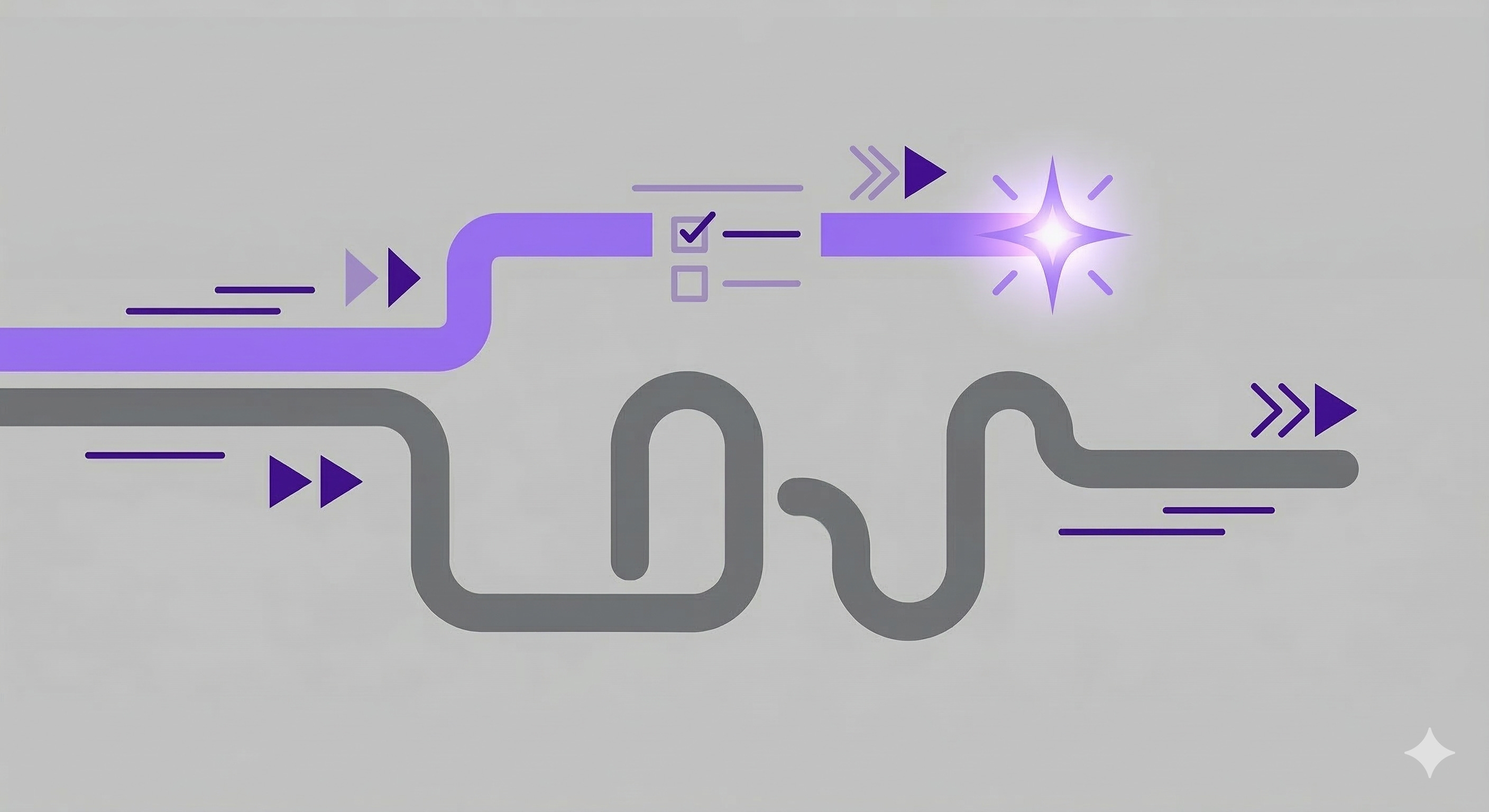
A good early win has three qualities: it’s high-visibility (people will notice it got fixed), it’s feasible within the first few weeks, and it aligns with the broader goals of the engagement so it doesn’t feel like a distraction. Maybe it’s streamlining a reporting process that’s eating up staff time, or restructuring a meeting agenda that everyone quietly hates, or producing a simple framework that helps the team talk about a recurring tension they haven’t had language for.
I frame these explicitly as experiments, not solutions. “I noticed X during our conversations, and I want to try something that might help. Let’s see how it works.” This sets the right expectation. I am not claiming to have fixed their organization in week two. But I have demonstrated that I am listening, I am capable, and the engagement is going to produce tangible value.
The early win buys you the time and trust to do the deeper diagnostic work that the engagement actually requires.
What I Do Now That I Didn’t Do at First
I used to treat the first meeting as the beginning of the engagement. Now I treat the signed contract as the beginning and the first meeting as a milestone I’ve already prepared for. The document review, the questionnaire, the reading all happens before the clock starts in the client’s mind.
I also used to schedule a “kickoff meeting” that tried to accomplish everything: rapport-building, information-gathering, expectation-setting, and project planning. Now I separate those functions.
The first meeting is for listening and asking questions informed by my pre-reading. The expectations conversation is a separate session where we collaboratively define what success looks like, how we’ll communicate, and what happens when — not if — the scope needs to shift. The project plan comes after the initial research, not before, because any plan I write before I’ve talked to the people doing the work is a fiction.
And I now end every learning phase with a formal presentation of findings before moving into execution. This is a practice I resisted for a long time because it felt like it slowed things down. It does slow things down. It also prevents the most common failure mode in consulting, which is executing on a plan that was built on incomplete understanding.
The presentation is a short document summarizing what I’ve learned, what I believe the real challenges are (which may differ from what was originally described), and what I recommend as the path forward. The client gets to push back, add context, and correct my misunderstandings. We revise it together, and then we move forward with a shared picture of reality instead of two separate ones.
Beginnings Still Suck
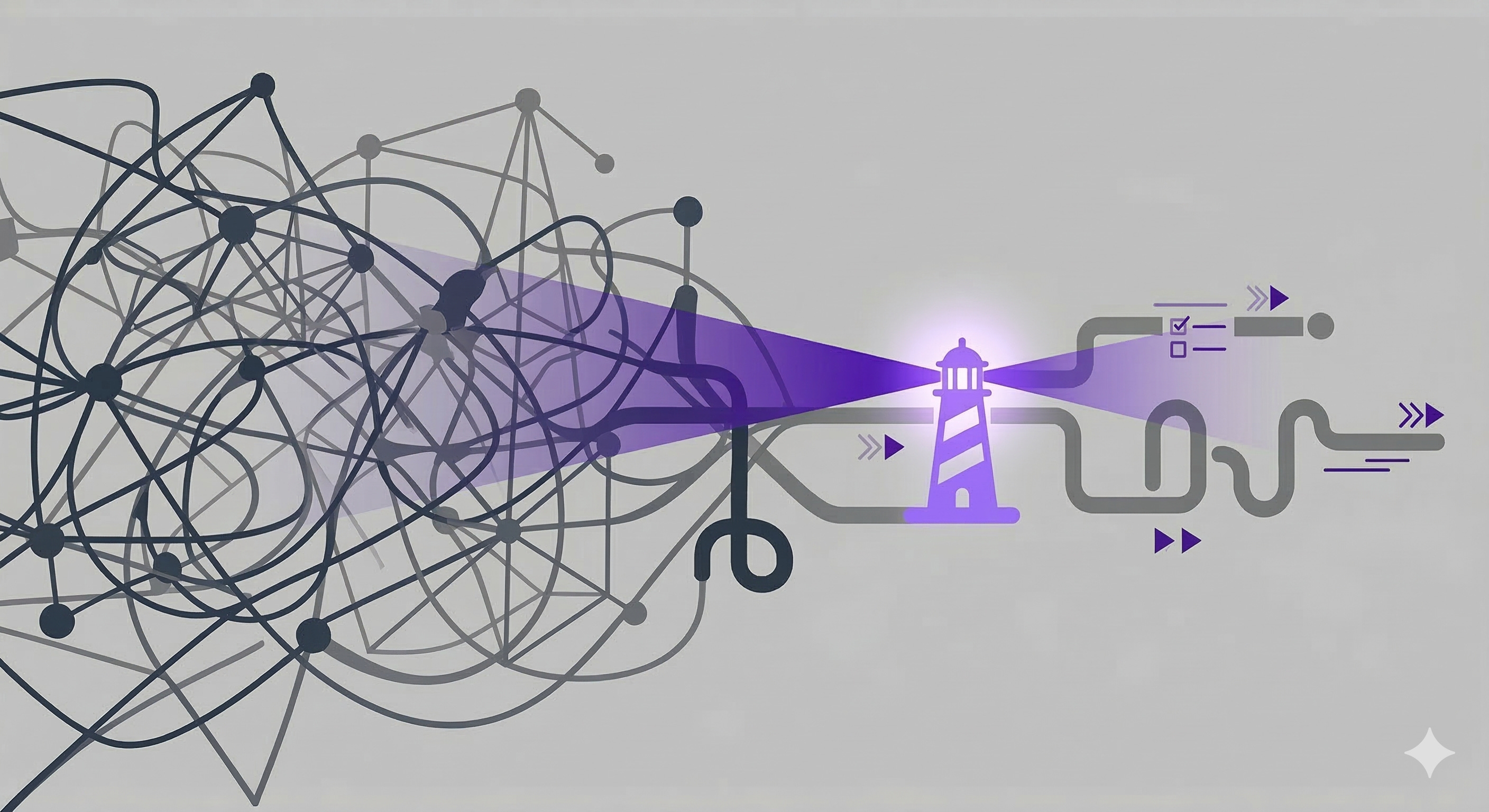
I wish I could say I’ve systematized this so thoroughly that new engagements feel routine. They don’t. The first few weeks of any client relationship still carry a specific kind of anxiety: the awareness that I’m forming impressions that might be wrong, making judgments with incomplete information, and building trust with people who don’t yet have reason to trust me.
What’s changed is that I’ve stopped trying to resolve that anxiety by rushing toward solutions. The discomfort of not knowing is part of the job. It’s actually a signal that I’m paying attention, and that I haven’t defaulted to a framework before I understand the terrain. The engagements that went wrong were the ones where I moved fast to make the uncertainty go away. The ones that went well were the ones where I sat in the uncertainty long enough to see what it was trying to show me.